
Flooring Calculator
Calculate total flooring square footage for one or more rooms with waste factor, material type presets, optional box count, and cost estimate. Covers hardwood, laminate, vinyl plank, tile, and carpet projects.
Square Feet to Buy
132sq ft
Includes 10% waste
- Base area
- 120.0 sq ft
- Waste
- 12.0 sq ft
- Square yards
- 14.7 sq yd
Material Type
Sets recommended waste factor automatically
Rooms / Areas
120.0 sq ft
Waste Factor
Flooring Summary
- Base Area
- 120.0 sq ft
- Waste (10%)
- 12.0 sq ft
- Total to Purchase
- 132 sq ft
- Square Yards
- 14.7 sq yd
Formulas, assumptions, and rounding are documented in our calculator methodology.
Built and maintained by Will Henschell, Data Scientist. Editorial policy.
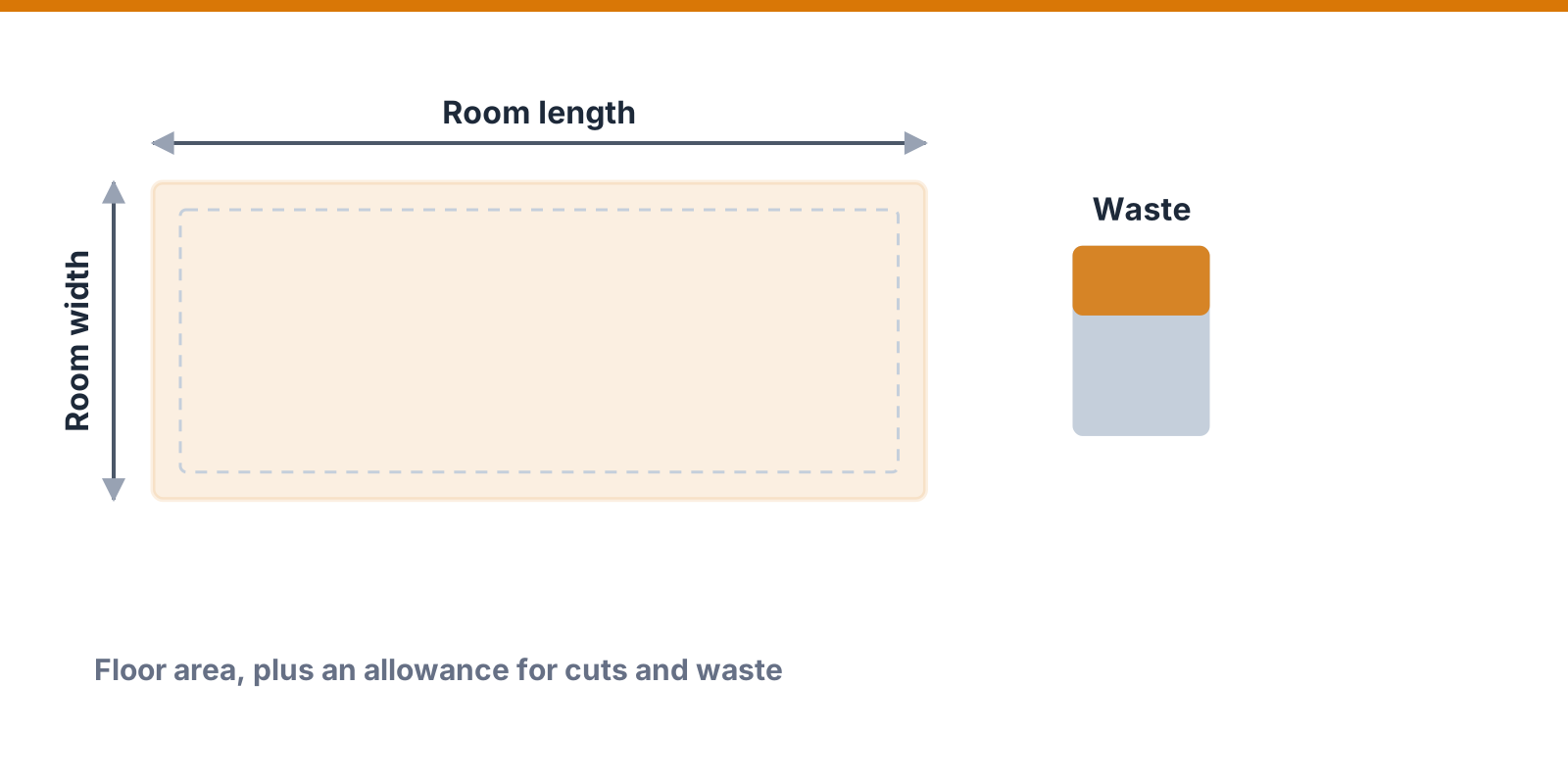
Flooring Formula with Waste Factor
Total square footage to purchase = total room area × (1 + waste factor ÷ 100). Room area = length (ft) × width (ft). Waste factors: straight-lay = 10%, diagonal/herringbone = 15%, complex tile = 20%. Example: two rooms, 14 ft × 18 ft and 10 ft × 10 ft = 252 + 100 = 352 sq ft. With 10% waste: 352 × 1.10 = 387.2 sq ft. Round up to 388 sq ft, or to the nearest box.
Waste Factors and Box Counts by Material
Hardwood (straight lay): 10% waste. Hardwood (diagonal): 15%. Laminate or vinyl plank (click-lock, straight): 10%, 20–25 sq ft/box typical. Laminate or vinyl plank (diagonal): 15%. Ceramic or porcelain tile (grid): 10%. Ceramic or porcelain tile (diagonal or pattern): 15–20%. Carpet: sold in 12-foot rolls; your installer calculates roll cuts to minimize seams. Enter the sq ft per box from the product label to get an exact box count.
Material Cost Estimate and What Else to Budget
Material cost = total sq ft (with waste) × price per sq ft. Beyond the flooring itself, budget for: underlayment ($0.25–$0.75/sq ft for laminate and vinyl), transition strips ($10–$30 each), adhesive or thinset mortar (for glue-down or tile), grout and spacers (for tile), and installation labor if hiring out ($2–$8/sq ft depending on material and region). These additional costs can equal 30–50% of the flooring material price on a full project.
Frequently Asked Questions
- The standard waste factor depends on your installation pattern. Straight-lay (parallel to walls): add 10%. Diagonal lay or herringbone: add 15%. Intricate tile patterns with many cuts: add 15–20%. Always round up to the next full box or bundle — you cannot return a partial box, and leftover flooring is valuable for future repairs.
- Measure the length and width of each room in feet and multiply: sq ft = length × width. Include closets — they need flooring too. For L-shaped rooms, divide into two rectangles, calculate each, and add them. Add all room totals together for the full project square footage.
- Find the square footage per box on the product label (typically 15–25 sq ft per box for laminate or vinyl plank). Divide your total square footage (including waste) by the sq ft per box and round up: boxes = ⌈total sq ft ÷ sq ft per box⌉. Never round down — you need whole boxes, and running short mid-project risks mismatched lot numbers.
- Yes. Include all spaces that will receive the same flooring: closets, hallways, and nooks. Buying all the material from the same production lot ensures color and texture consistency. Calculating closets separately increases the risk of a mismatched batch if you need to buy more later.
- For large-format tiles in a straight grid pattern, 10% is usually enough. For smaller tiles, mosaic sheets, or any diagonal pattern, use 15%. For complex custom patterns with many angled cuts, some installers recommend 20%. The more cuts required, the more waste you generate.
- Budget for: underlayment ($0.25–0.75/sq ft for laminate and vinyl plank), transition strips ($10–30 each where materials meet), adhesive (for glue-down tile), thinset mortar and grout (for tile), and installation labor if not DIY ($2–8/sq ft depending on material and region). These can add 30–50% to material cost on a typical project.
- Use the multi-room feature in this calculator — add each rectangular section separately. For an L-shaped room, split it into two rectangles, add each as a separate room, and the calculator will sum the total. Include closets and walk-in areas as separate rooms so all material comes from the same lot.