
Tile Calculator
Calculate how many tiles you need to cover a room or area. Enter room dimensions, tile size, and waste factor — get the exact tile count and optional box count.
Tiles Needed
132tiles
12″ tiles, incl. 10% waste
- Room area
- 120.0 sq ft
- With waste
- 132.0 sq ft
Tile Size (square tile)
Waste Factor
Area Summary
- Room Area
- 120.0 sq ft
- Waste (10%)
- 12.0 sq ft
- Total Area to Cover
- 132.0 sq ft
- Each Tile
- 1.000 sq ft
- Tiles Needed
- 132
Formulas, assumptions, and rounding are documented in our calculator methodology.
Built and maintained by Will Henschell, Data Scientist. Editorial policy.
Choosing the Right Waste Factor
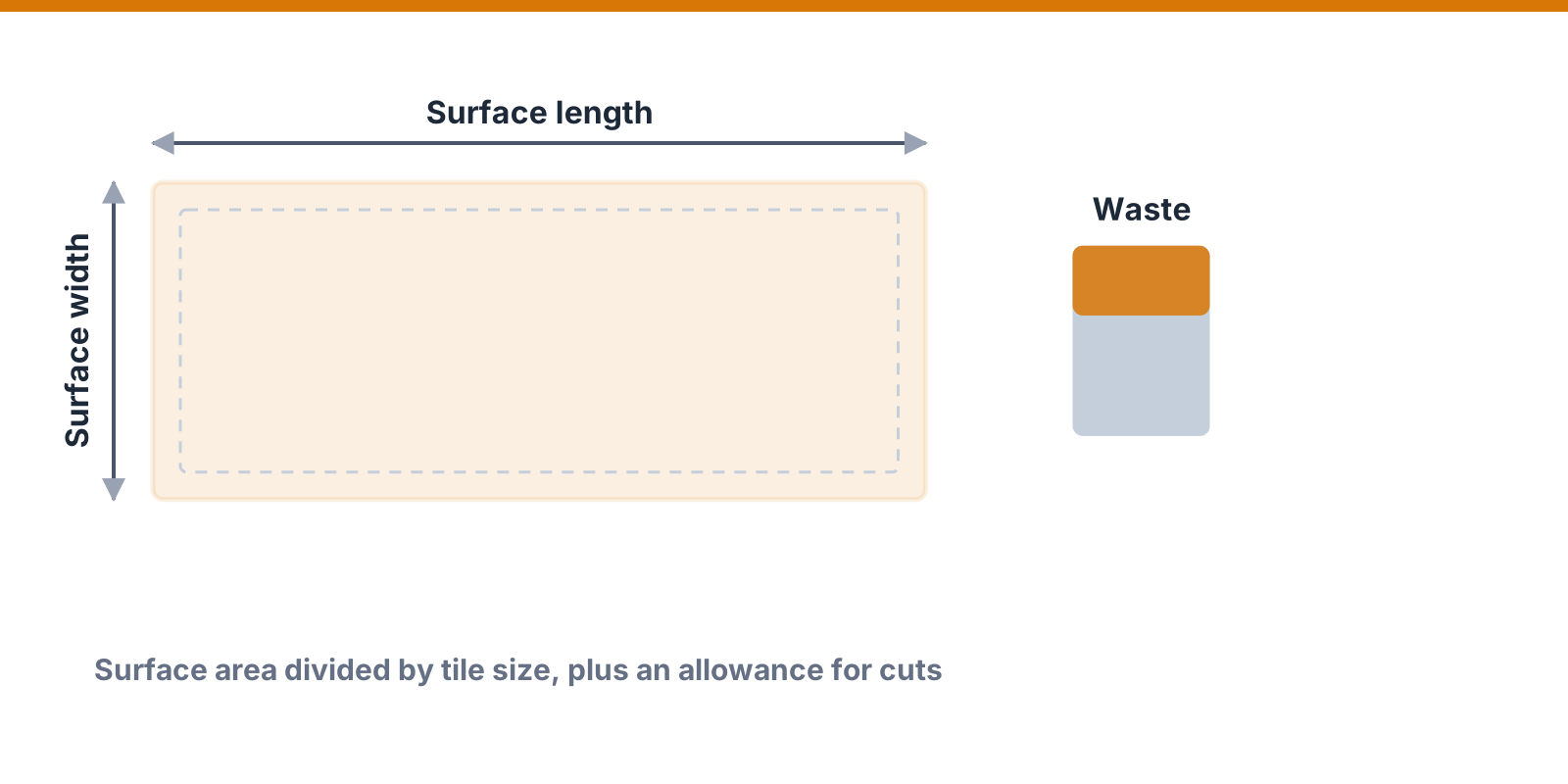
The waste factor accounts for tiles cut at room edges, around obstacles, and breakage. A 10% waste factor is appropriate for straightforward rectangular rooms with tiles laid parallel to the walls. Use 15% for diagonal (45°) patterns, which require more cuts and generate more waste. Budget 20% for herringbone, chevron, or any pattern with many angled cuts, or for rooms with many fixtures, columns, or irregular shapes. Buying extra from the same production batch also protects you if a tile breaks during installation or needs future repair — batch color can vary slightly between production runs.
Tile Size and Room Coverage
Larger tiles (18×18 or 24×24 in) cover more area per tile, reducing the total count but requiring more precise leveling and subfloor preparation. Smaller tiles (6×6 or mosaic sheets) require more grout lines and cutting work around edges. For a typical 10×12 ft bathroom floor, 12×12 tiles require about 132 tiles (with 10% waste); 18×18 tiles require about 59; 24×24 tiles require about 33. Always verify the exact tile dimensions on the product label — nominal sizes often differ from actual sizes.
Tile Cost Estimation
Tile cost is priced per square foot or per box. Multiply total square footage (with waste) by the price per square foot to estimate material cost. Professional installation labor typically runs $4–$12 per square foot depending on tile type, pattern complexity, and region. Natural stone and large-format tiles cost more to install than standard ceramic. Subfloor preparation, backer board, mortar, grout, and spacers are additional costs to budget.
Frequently Asked Questions
- Multiply room length by width to get the area in square feet. Divide by the area of one tile (tile size in feet squared). Multiply by a waste factor of 1.10 (10%) for standard installs or 1.15–1.20 for diagonal or complex patterns.
- 10% extra (waste factor 1.10) is standard for simple rectangular rooms with straight tile layout. Use 15% for diagonal patterns. Use 20% for intricate patterns, many cuts around obstacles, or oddly shaped rooms. Always buy a few extra tiles from the same batch for future repairs.
- A 10×10 room = 100 sq ft. A 12×12 inch tile = 1 sq ft. With 10% waste, you need 100 × 1.10 = 110 tiles. With 15% waste, 115 tiles.
- Divide total square footage (including waste) by the area of one tile in square feet. For a 12×12 tile: area = 1 sq ft. For an 18×18 tile: area = (18/12)² = 2.25 sq ft. For a 24×24 tile: area = 4 sq ft.