
Paint Calculator
Estimate how many gallons of paint you need for walls and ceilings. Enter room dimensions, doors, windows, number of coats, surface texture, and optional price per gallon for an accurate purchase estimate with quart/gallon rounding.
Gallons Needed
2gallons
Suggested purchase: 2 gallons
- Wall area
- 396 sq ft
- Deductions
- 50 sq ft
Quick examples
Wall Surface Texture
Sets coverage rate (sq ft per gallon)
Overrides the preset above. Check the can — coverage varies by finish.
Wall Coats
Paint Estimate
- Wall Area (gross)
- 396 sq ft
- Deductions (doors + windows)
- 50 sq ft
- Paintable Wall Area
- 346 sq ft
- Wall Gallons (2 coats)
- 1.98 gal
- Total Gallons Needed
- 1.98 gal
- Suggested Purchase
- 2 gallons
Formulas, assumptions, and rounding are documented in our calculator methodology.
Built and maintained by Will Henschell, Data Scientist. Editorial policy.
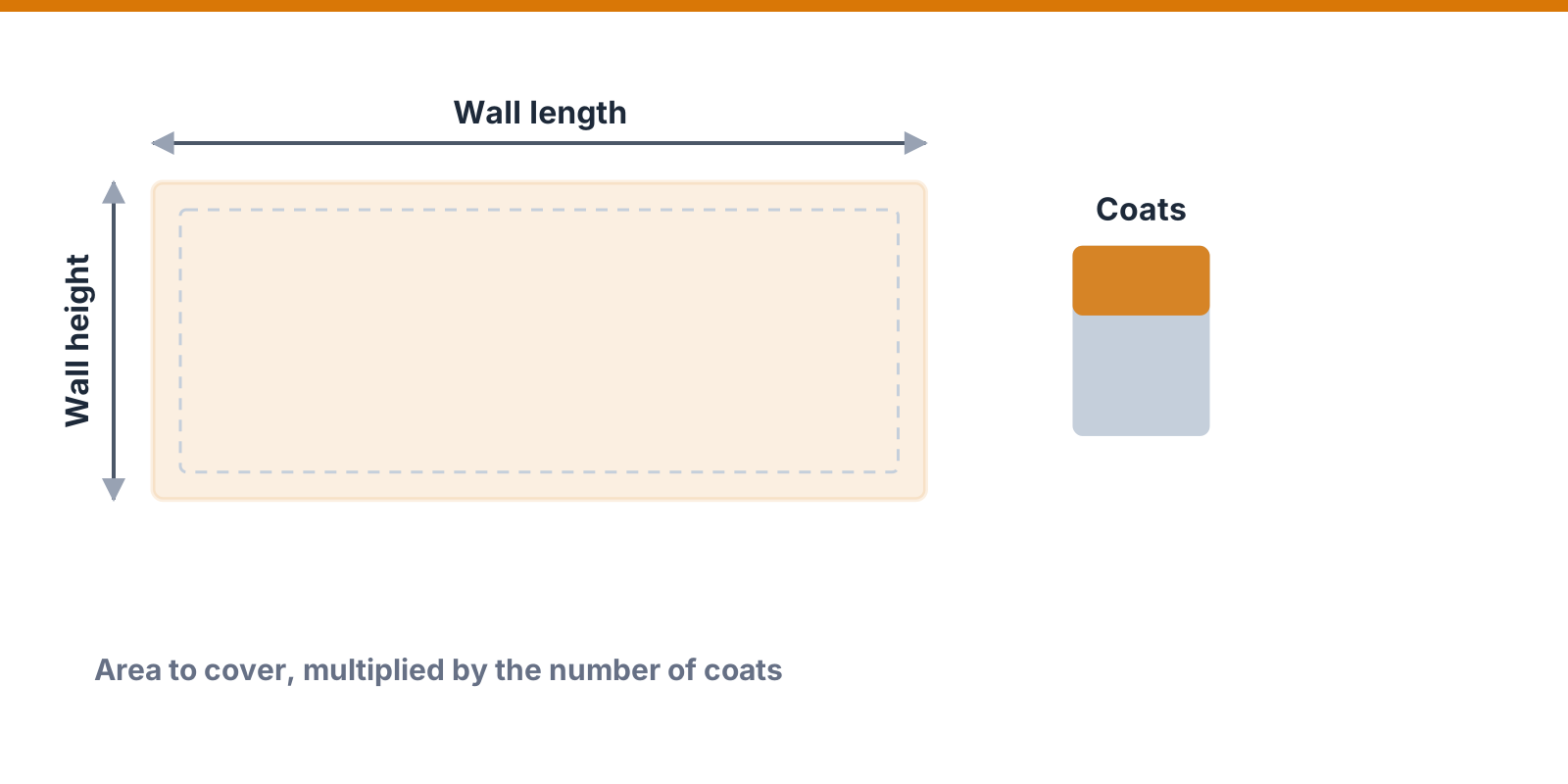
Paint Coverage Formula
Total wall area = room perimeter × ceiling height. Room perimeter = 2 × (length + width). Deductions: subtract 20 sq ft per door, 15 sq ft per window. Paintable wall area = total wall area − deductions. Wall gallons = (paintable area × coats) ÷ coverage rate (sq ft/gallon). Ceiling gallons = (length × width × ceiling coats) ÷ ceiling coverage. Round up to the nearest quart for amounts under 1 gallon, or to full gallons for larger quantities.
Common Room Examples and Typical Gallons Needed
Small bedroom (10×10 ft, 8 ft ceiling, 1 door, 1 window, 2 coats): approximately 1 gallon. Standard bedroom (12×10 ft, 9 ft ceiling, 1 door, 2 windows, 2 coats): approximately 1–2 gallons. Living room (16×14 ft, 9 ft ceiling, 1 door, 3 windows, 2 coats): approximately 2–3 gallons. Open-concept (20×18 ft, 10 ft ceiling, 2 doors, 4 windows, 2 coats): approximately 3–4 gallons. These estimates assume 350 sq ft/gallon coverage on smooth walls.
Paint Finish Types and When to Use Them
Flat/matte: hides surface imperfections, best for ceilings and low-traffic bedrooms. Eggshell: slight sheen, easy to wipe, good for living rooms and bedrooms. Satin: more durable sheen, good for hallways, kids' rooms, and light trim. Semi-gloss: durable and moisture-resistant, standard for trim, doors, and bathrooms. Gloss: maximum durability and sheen, best for cabinets, doors, and high-contact surfaces.
Primer: When You Need It and How to Budget for It
Primer is recommended when: painting bare drywall, wood, or plaster; painting over a dark color with a much lighter one; covering stains or water damage; or switching paint types (latex over oil-based). Primer has its own coverage rate (300–400 sq ft/gallon) and counts as an additional coat in your quantity estimate. Tinted primer close to your finish color reduces the number of finish coats needed and saves money on premium paints.
Frequently Asked Questions
- One gallon of interior paint typically covers 350–400 square feet per coat on smooth, primed drywall. Textured surfaces (orange peel, knockdown) reduce coverage to 300 sq ft/gal. Rough or porous surfaces like brick or masonry may only yield 200–250 sq ft/gal. Always use the coverage listed on your specific can as the starting point.
- Most interior projects require two coats for complete, even coverage. Two coats are especially important when painting over a darker existing color, switching from a warm to a cool tone, or using a lighter color over a dark one. Premium paints labeled 'one-coat coverage' may suffice on similarly colored painted surfaces, but two coats still produce a better result in most cases.
- Ceiling area = room length × room width. Most ceilings take one coat of ceiling paint (flat finish) unless you are painting a dark ceiling light or covering stains. Ceiling paint coverage is similar to wall paint: 350–400 sq ft/gallon on smooth drywall. Use the ceiling toggle in this calculator to add a ceiling estimate to your total gallons.
- Yes. Subtract approximately 20 square feet per standard door (32×80 in) and 15 square feet per standard window from your total wall area. For large picture windows or sliding glass doors, measure their actual area and subtract it. Skipping the deductions simply gives you a small amount of extra paint for touch-ups.
- Buy 10–15% more than your calculated estimate for touch-ups, roller nap absorption, waste at edges, and surface variations. Keeping leftover paint in a labeled can is the only reliable way to match color for future touch-ups, since paint batches vary slightly between production runs.
- Primer is recommended when painting bare drywall, unprimed wood, or plaster; when covering a very dark color with a much lighter one; or when covering stains or water damage. Primer has its own coverage rate (300–400 sq ft/gallon) and adds to your total material quantity. Tinted primer that matches your finish coat color can reduce the number of finish coats from two to one.
- Trim and doors are usually painted with semi-gloss or gloss paint, sold in quart cans for small jobs. A standard door (both sides) takes about 1 quart. Baseboards and window casings in a typical room use ½ to 1 quart. For large trim projects, calculate total linear footage and use the manufacturer's coverage to estimate cans needed.