Calculate age, date differences, countdowns, and time between events.
Time and date calculators compute exact durations, ages, and intervals — handling leap years, varying month lengths, and inclusive vs. exclusive date counting automatically. Use them for project planning, legal and contract dates, personal milestones, or any situation where you need an accurate count of days, weeks, months, or years between two points in time.
Find your exact age in years, months, days, and total days old.
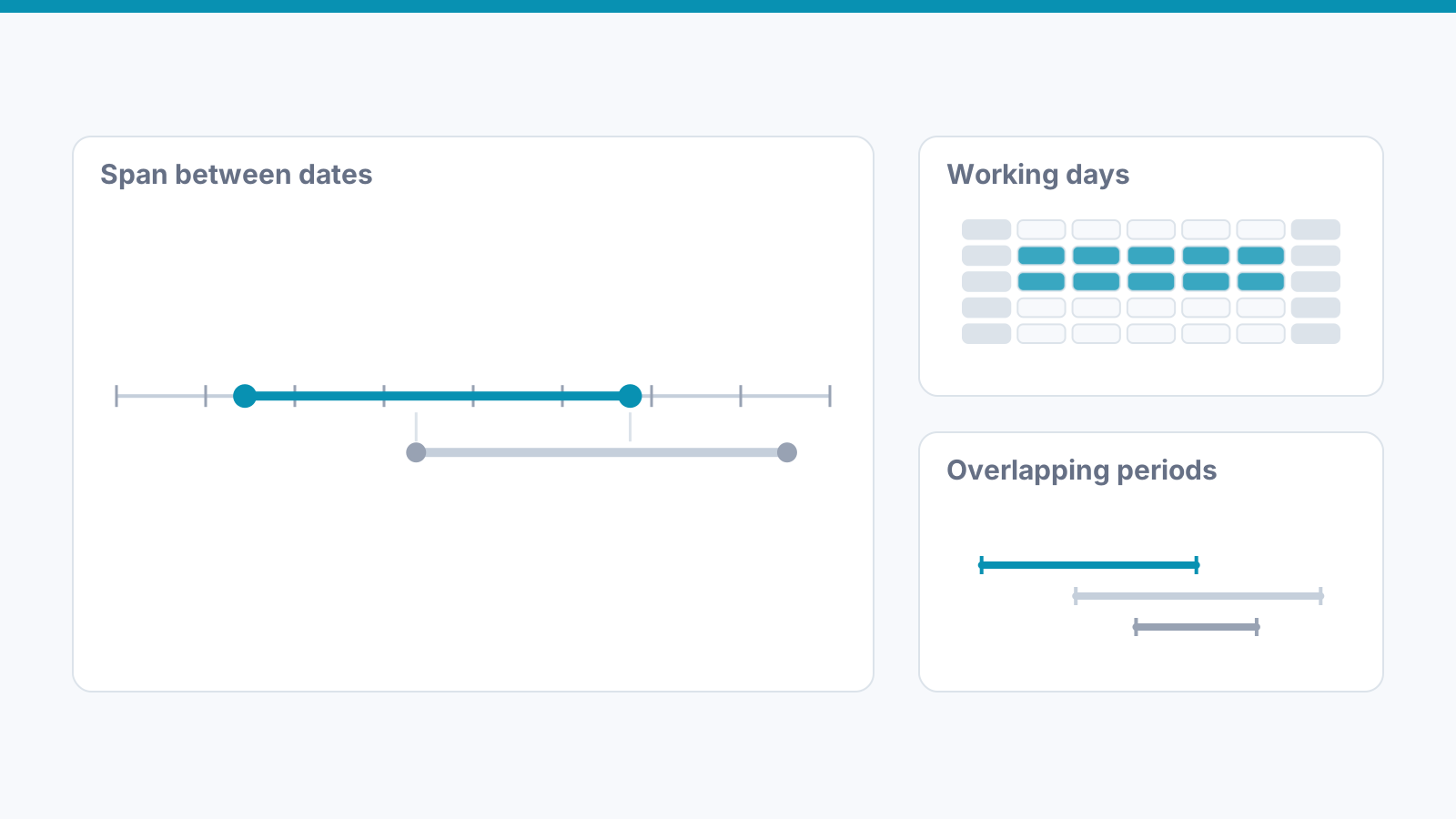
Open calculator →Find days, weeks, and months between any two dates.
Open calculator →Count working days between any two dates.
Open calculator →Add or subtract days, weeks, months, or years from any date.
Open calculator →Finding your exact current age: Age Calculator computes years, months, and days from your birthdate to today. Days, weeks, months, or years between any two dates: Date Difference Calculator with optional inclusive counting. Adding or subtracting days, weeks, months, or years from any date: Date Add/Subtract Calculator. Counting only working days between two dates: Business Days Calculator.
Calendar math seems simple until you account for the details. Months have 28, 29, 30, or 31 days — an uneven distribution that makes month-based date arithmetic non-trivial. Leap years add a day every four years, with exceptions: century years (1900, 2100) are not leap years unless they are also divisible by 400 (2000, 2400). A 'month' between, say, January 31 and February 28 requires a definition of what counts as a complete month. These calculators implement standard calendar rules consistently, so you get the same result you would from a careful manual calculation — without the risk of miscounting.
Whether you count both the start and end dates — or neither — makes a one-day difference in results. Exclusive counting (the default for most contexts) counts only the days between the dates. Inclusive counting adds 1 to include both endpoints. For example, an event from Monday to Friday: exclusive = 4 days (Tuesday, Wednesday, Thursday, Friday); inclusive = 5 days (Monday through Friday). For legal deadlines, lease terms, warranty periods, and contract durations, the applicable contract language specifies which method applies. The Date Difference Calculator supports both with a single toggle.
Project management: calculating how many days remain until a deadline or how long a project phase lasted. Contracts and legal: verifying a lease term, warranty period, or notice period specified in days or months. Finance: determining the exact length of a loan term in days for interest calculations. Personal milestones: counting days until a birthday, anniversary, retirement, or event. Travel: calculating trip length, visa validity remaining, or passport expiration distance. Pregnancy: estimating due date or counting weeks of gestation. Employment: calculating tenure, probationary periods, or benefit eligibility dates.