
Concrete Calculator
Calculate the volume of concrete needed for slabs, footings, columns, walls, curbs, and stairs. Results in cubic yards, cubic feet, cubic meters, and bag counts for 60 lb and 80 lb bags. Always add a 10% waste factor.
Cubic Yards Needed
1.36cu yd
Includes 10% waste
- Cubic feet
- 36.67 ft³
- Cubic meters
- 1.04 m³
- 80 lb bags
- 62
Project Type
Slab volume uses length x width x thickness.
Volume Summary
- Cubic Feet
- 36.67 ft³
- Cubic Yards
- 1.36 yd³
- Cubic Meters
- 1.04 m³
Estimated Bags (hand mixing)
- 40 lb bags
- 123 bags
- 50 lb bags
- 98 bags
- 60 lb bags
- 82 bags
- 80 lb bags
- 62 bags
Cost Estimate (Optional)
Formulas, assumptions, and rounding are documented in our calculator methodology.
Built and maintained by Will Henschell, Data Scientist. Editorial policy.
Concrete Volume Formulas by Shape
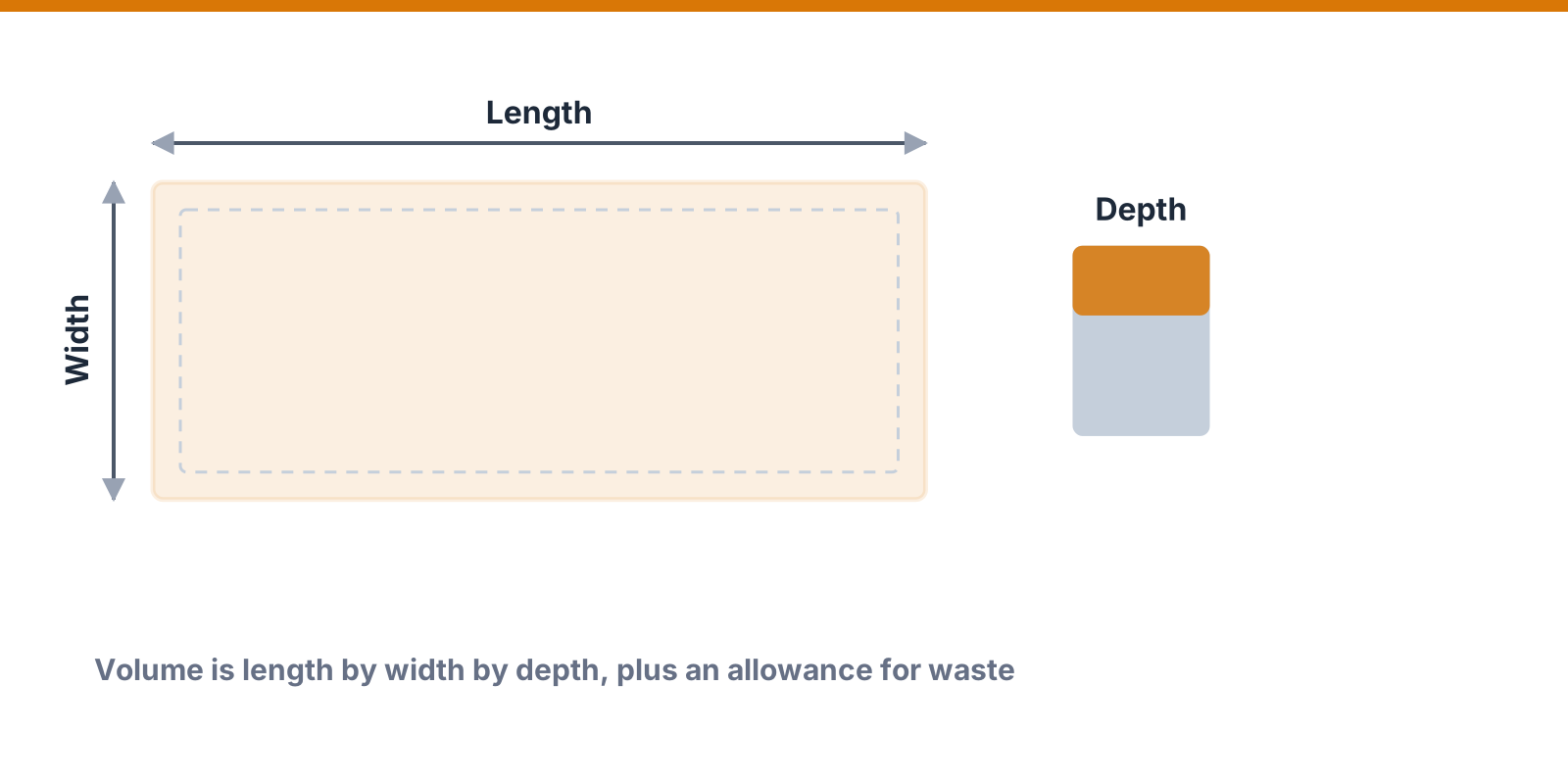
Slab or rectangular footing: Volume (ft³) = length × width × depth. Wall: length × height × thickness. Curb: length × width × height. Round column: π × radius² × height. Stairs: 1/2 × total run × total rise × stair width for a solid stair-run estimate. Convert inches to feet first (4 inches = 0.333 ft), then convert cubic feet to cubic yards by dividing by 27. Example: 10 ft × 12 ft slab, 4 inches thick = 10 × 12 × 0.333 = 40 ft³ = 1.48 cu yd × 1.10 waste = 1.63 cu yd.
Bags vs. Ready-Mix: Which to Choose
Bagged pre-mix concrete is convenient for small pours (under 1 cubic yard) where mixer access is limited. One 80 lb bag yields about 0.60 cu ft. For a 2 cu yd pour (54 cu ft), you would need about 90 bags — expensive and very labor intensive. Ready-mix concrete delivered by truck is more consistent, easier to place, and often cheaper for pours above 1 cubic yard. Typical minimums start at 1 cubic yard from most suppliers.
Important: Add a Waste Factor
Always purchase 10% more concrete than your calculated volume to account for: subgrade variations (the ground is never perfectly flat), spillage and overfill at forms, minor form flex under wet concrete pressure, and waste during mixing. Some contractors add 15% for unusually uneven subgrades. Running out of concrete mid-pour forces you to stop, which can create cold joints (structural weak points) in the finished slab.
Frequently Asked Questions
- Cubic yards = (length × width × depth) ÷ 27, with all measurements in feet. Convert inches to feet first (4 inches = 0.333 feet). Always add at least 10% for waste. Example: 12 ft × 16 ft × 0.333 ft = 63.9 ft³ ÷ 27 = 2.37 cu yd × 1.10 = 2.61 cu yd.
- Standard residential floor slabs and patios: 4 inches. Driveways and areas with vehicle traffic: 6 inches. Structural foundations: consult an engineer for your local requirements and soil conditions.
- An 80 lb bag of pre-mixed concrete yields approximately 0.60 cubic feet. It takes about 45 bags to fill 1 cubic yard. A 60 lb bag yields about 0.45 cubic feet, so about 60 bags per cubic yard. For projects over 0.5 cubic yards, ready-mix delivery is usually more cost-effective.
- For pours larger than about 0.5–1 cubic yard, ready-mix concrete delivered by truck is more cost-effective, less labor-intensive, and produces more consistent results. Most ready-mix suppliers have a minimum order of 1 cubic yard. For smaller pours, bagged pre-mix is practical.
- For rectangular footings, use length × width × depth ÷ 27. For round columns, use π × radius² × height ÷ 27 (all in feet). This calculator handles both shapes automatically.
- Yes. Walls use length × height × thickness. Curbs use length × width × height. Stairs use a solid stair-run approximation based on stair width, number of steps, tread depth, and riser height. Complex steps, landings, structural walls, or reinforced forms should be checked by a contractor or engineer.