
Amazon FBA Fee Calculator
Estimate current U.S. Amazon referral, selling-plan, FBA fulfillment, surcharge, storage, product-cost, profit, and margin amounts per unit.
Estimated FBA profit
$6.84per unit
Estimated margin 22.8%
- Amazon fees
- $10.06
- All costs
- $23.16
- Monthly profit
- $684.26
Amazon fees per unit
- Referral fee - Home and Kitchen
- $4.50
- Base FBA fulfillment
- $4.50
- Fuel/logistics surcharge (3.5%)
- $0.16
- Selling-plan allocation
- $0.40
- Monthly storage per unit
- $0.20
- Inbound placement per unit
- $0.30
- Closing fee
- $0.00
- Other Amazon fees
- $0.00
- Total Amazon fees
- $10.06
Unit economics
- Total sales price
- $30.00
- Proceeds after Amazon fees
- $19.94
- Advertising allocation
- $3.00
- Returns reserve
- $0.60
- Fixed non-Amazon costs
- $9.50
- All per-unit costs
- $23.16
- Estimated profit
- $6.84
U.S. Amazon sources checked 2026-08-17
Use the current Amazon Revenue Calculator or Fee Preview for the base fulfillment and account-specific fields. Do not add the surcharge twice.
What this calculator assumes
- U.S. Amazon store, USD, one completed non-refunded FBA unit.
- Total sales price includes list price, customer-paid shipping, and gift wrap; sales tax is excluded.
- The base fulfillment input comes from Amazon because price, dimensions, weight, season, and programs can change it.
- Turn the surcharge off if the entered Amazon fulfillment amount already includes it.
- Aged inventory, returns processing, removal, storage utilization, low-inventory, promotions, and credits belong in the editable cost fields when applicable.
Formulas, assumptions, and rounding are documented in our calculator methodology.
Built by Will Henschell, data scientist. Formula checked against Amazon's 2026 US referral and FBA fee schedules, verified . Editorial policy.
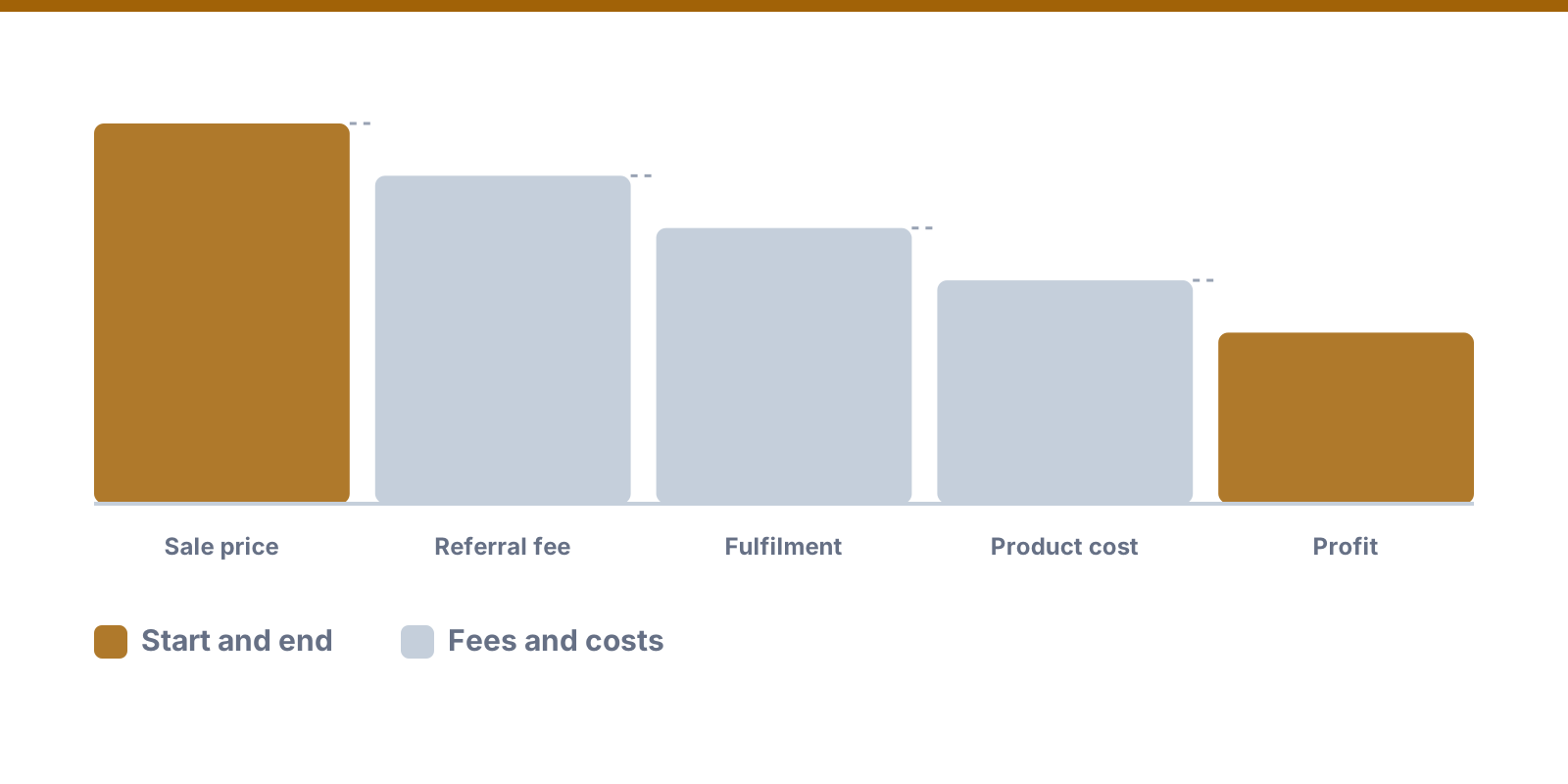
The Amazon FBA Profit Formula
Per-unit profit equals total sales price minus the category referral fee, any closing fee, selling-plan allocation, fulfillment and surcharge, storage, inbound placement, other Amazon fees, product and inbound-shipping costs, advertising allocation, return reserve, and other known costs. Profit divided by total sales price gives margin; multiplying per-unit profit by monthly units gives the monthly estimate.
Referral Rates, Minimums, and Price Tiers
Amazon categories can use a flat percentage, a whole-price threshold, or progressive portions. Baby and Beauty switch rates above $10; Clothing uses three whole-price bands; Compact Appliances, Electronics Accessories, Furniture, Jewelry, Fine Art, and Watches apply different percentages to price portions. The calculator keeps those structures separate and applies published minimums only where Amazon lists them.
Use Amazon's Product-Specific Fulfillment Amount
Fulfillment covers picking, packing, shipping, customer service, and returns handling. Amazon says the charge depends on price, weight, and dimensions and recommends its Revenue Calculator or Fee Preview. Copy the current base amount into this tool, then decide whether the temporary 3.5% surcharge is already included.
Inventory and Account Costs Need Explicit Inputs
Monthly storage uses the daily average volume occupied. Aged inventory, returns processing, removal or disposal, inbound placement, low-inventory-level charges, promotions, credits, and other programs depend on account and inventory facts. Editable per-unit fields make those assumptions visible instead of pretending every seller pays one amount.
Official U.S. Source Review - August 17, 2026
Public referral and selling-plan rules were checked against Amazon's U.S. pricing page. FBA scope and variable costs were checked against Amazon's FBA and Revenue Calculator guidance. Amazon says 2026 holiday-peak FBA fees apply October 15, 2026 through January 14, 2027 at the same per-unit increases as 2025, averaging $0.32, with the temporary 3.5% surcharge added on top. Fulfillment remains an effective-dated, product-specific input.
Frequently Asked Questions
- Start with the category referral fee on total sales price, then add the selling-plan allocation, product-specific FBA fulfillment, storage, inbound placement, and other applicable Amazon charges. This calculator also adds product, shipping, advertising, and return-reserve costs to estimate profit. Amazon's own fulfillment amount depends on price, dimensions, and weight, so it remains an explicit input.
- Amazon says total price includes list price plus customer-paid shipping and gift wrap. Its public pricing page also warns that the fee category can differ from the category customers see. Enter tax-exclusive total sales price and use the custom option if Seller Central shows a different flat rate or minimum.
- Yes. The default adds Amazon's temporary 3.5% U.S. FBA fuel and logistics surcharge, effective April 17, 2026, to the entered base fulfillment fee. Turn it off when the amount copied from Amazon already includes the surcharge so it is not counted twice.
- Amazon's current fee depends on product price as well as size and weight, and seasonal or program rules can change it. Amazon directs sellers to its Revenue Calculator and Fee Preview for a product-specific amount. Entering that current amount is more reliable than embedding a universal table that can be incomplete or stale.
- The default includes an editable monthly storage amount per unit. Put aged inventory, returns processing, removal, low-inventory-level, storage-utilization, or other account-specific allocations in the other Amazon fee field when they apply. The calculator does not infer inventory age, turnover, or return disposition.