
Macro Calculator
Calculate your daily protein, carbohydrate, and fat targets in grams based on your calorie goal and fitness objective. Choose from balanced, high-protein, low-carb, and keto macro splits, or enter a custom ratio.
Daily Macro Targets
150P / 200C / 67Fgrams
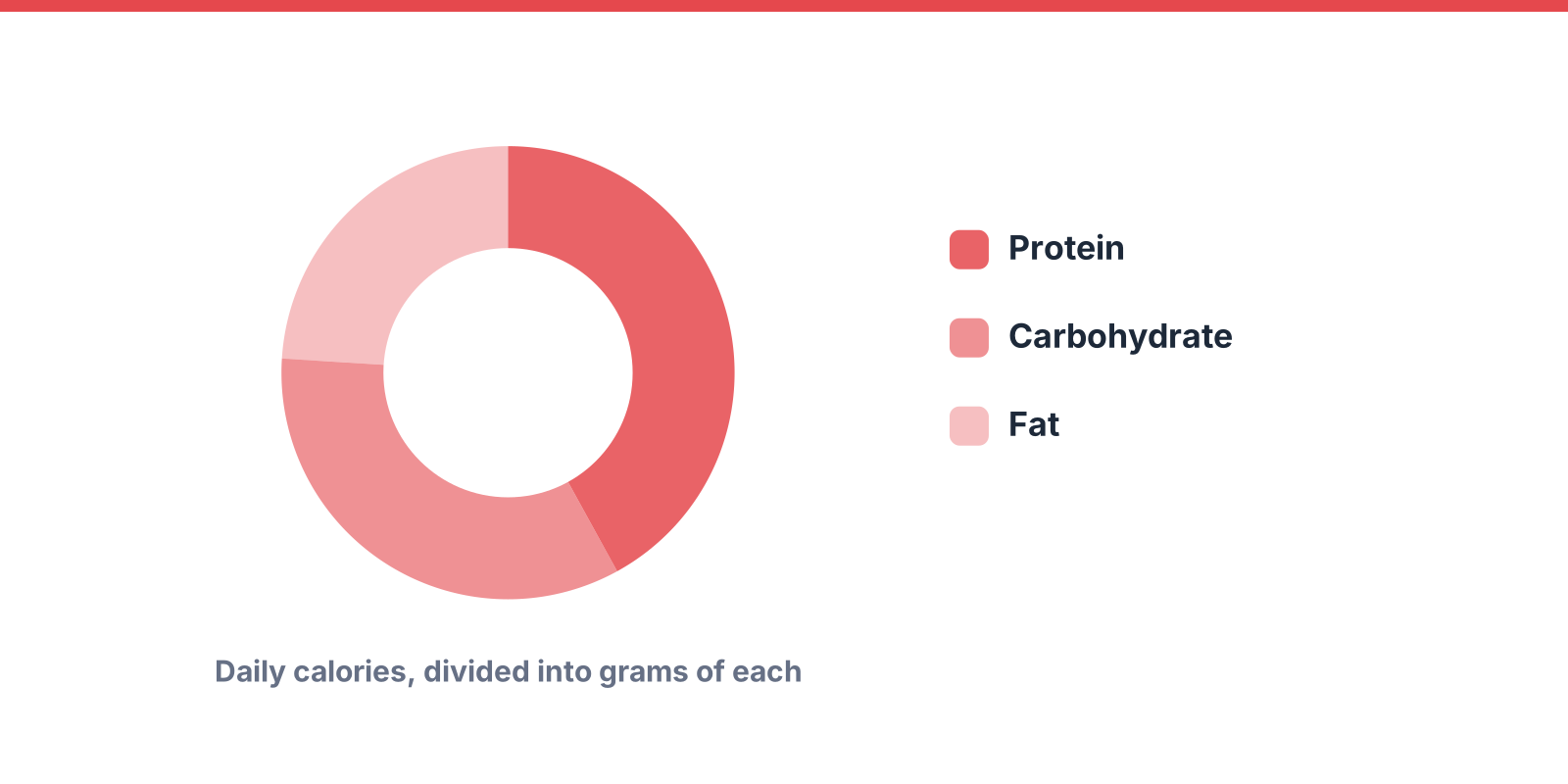
30% protein · 40% carbs · 30% fat of 2,000 cal
- Protein
- 150.0 g
- Carbs
- 200.0 g
- Fat
- 66.7 g
Calorie Distribution
Daily Macro Targets
- Protein
- 150.0 g (600 cal)
- Carbohydrates
- 200.0 g (800 cal)
- Fat
- 66.7 g (600 cal)
- Total Calories
- 2,000 cal
What this calculator assumes
- Uses the Atwater values: 4 cal/g for protein and carbohydrate, 9 cal/g for fat.
- Alcohol (7 cal/g) and fibre are not modelled separately.
- The preset splits are common starting points, not prescriptions. Percentages must total 100%.
Formulas, assumptions, and rounding are documented in our calculator methodology.
Built and maintained by Will Henschell, Data Scientist. Editorial policy.
Common Macro Splits by Goal
Balanced maintenance: 30% protein, 40% carbs, 30% fat. Weight loss (high protein): 40% protein, 30% carbs, 30% fat. Muscle gain: 30% protein, 40% carbs, 30% fat (with calorie surplus). Low carb: 40% protein, 20% carbs, 40% fat. Keto: 25% protein, 5% carbs, 70% fat. These percentages are starting points — individual adjustments based on results are normal and expected.
How to Track Macros
Use a food tracking app to log meals by weight. Weigh protein sources raw for accuracy. Pre-plan meals to hit targets consistently. Track for at least 2 weeks before adjusting. Focus on hitting protein first — protein is the most important macro for body composition. Carbs and fat can be adjusted within your remaining calories based on preference and performance.
Protein Targets by Bodyweight
Research consistently supports protein intakes of 1.6–2.2 grams per kilogram of bodyweight (0.7–1.0 g/lb) for muscle building and retention. Sedentary adults need less: the RDA is 0.8 g/kg. Example at 80 kg (176 lbs): muscle-building target = 128–176 grams of protein/day. At 2,400 daily calories, 160 g of protein = 640 protein calories = 27% of total. Good protein sources: chicken breast ≈ 31 g/100 g cooked, Greek yogurt ≈ 10 g/100 g, eggs ≈ 13 g each, whey protein ≈ 24 g/30 g serving.
Understanding Macro Percentages vs Grams
Macro targets are expressed as percentages of total daily calories or as grams per day. Conversion uses calorie content: protein = 4 cal/g, carbohydrates = 4 cal/g, fat = 9 cal/g. Example at 2,000 calories, 30% protein: 2,000 × 0.30 = 600 protein calories ÷ 4 = 150 g protein. 40% carbs: 800 ÷ 4 = 200 g carbs. 30% fat: 600 ÷ 9 = 67 g fat. Nutrition labels and tracking apps use grams — convert percentages to grams for practical daily tracking.
Sample Meals for Common Macro Targets
Balanced (30P/40C/30F) at 2,000 cal: Breakfast — 3 eggs + whole-grain toast (≈30P/25C/20F). Lunch — grilled chicken (150 g) + brown rice (100 g cooked) + vegetables (≈45P/35C/8F). Dinner — salmon (150 g) + sweet potato (150 g) + broccoli (≈38P/30C/18F). High Protein (40P/30C/30F): emphasize lean meats, egg whites, Greek yogurt, cottage cheese. Keto (25P/5C/70F): grilled chicken with avocado, olive oil, cheese, leafy greens — eliminate bread, rice, pasta, and most fruit. These are illustrative; use a food tracking app for precise counts.
Frequently Asked Questions
- Macronutrients (macros) are protein, carbohydrates, and fat — the three main energy-providing nutrients. Protein and carbohydrates each provide 4 calories per gram; fat provides 9 calories per gram. Tracking macros means monitoring how many grams of each you eat daily, rather than just counting total calories.
- A high-protein split — typically 35–40% protein, 30–35% carbs, 25–30% fat — is commonly recommended for weight loss. Higher protein intake preserves muscle mass during a calorie deficit and increases satiety, reducing hunger. The specific split matters less than maintaining a consistent calorie deficit; protein intake is the most important variable to keep high.
- For active people and those trying to build or preserve muscle, research supports 1.6–2.2 grams of protein per kilogram of bodyweight (0.7–1.0 g/lb). Sedentary adults need less — the RDA is 0.8 g/kg (0.36 g/lb). Example: a 75 kg (165 lb) active person should target 120–165 grams of protein per day.
- Carbohydrates are the body's preferred energy source, particularly for high-intensity exercise and brain function. One gram of carbs provides 4 calories. Complex carbs (oats, rice, sweet potatoes, legumes) provide sustained energy; simple carbs (fruit, sugar) provide quick energy. For most people engaged in moderate exercise, carbs should make up 40–55% of daily calories.
- A ketogenic (keto) diet uses approximately 70% fat, 25% protein, and 5% carbs — typically under 50 grams of carbs per day. This shifts the body into ketosis, burning fat for fuel instead of glucose. Research shows keto can be effective for short-term weight loss and may benefit blood sugar control in type 2 diabetes. Long-term compliance is the main challenge. Consult a registered dietitian before adopting keto for medical reasons.
- Dietary fat provides 9 calories per gram — more than double protein or carbs. Fat is essential for hormone production, absorption of fat-soluble vitamins (A, D, E, K), brain function, and cell membrane integrity. Low-fat diets (below 20% of calories from fat) can impair hormone balance over time. Healthy fat sources include avocado, olive oil, nuts, seeds, and fatty fish.