
Calorie Calculator
Estimate your daily calorie needs for maintenance, weight loss, or weight gain using the Mifflin-St Jeor equation (BMR) and activity level multiplier (TDEE). Includes targets for different weight change goals.
Daily Calorie Target
2,728cal/day
To maintain current weight
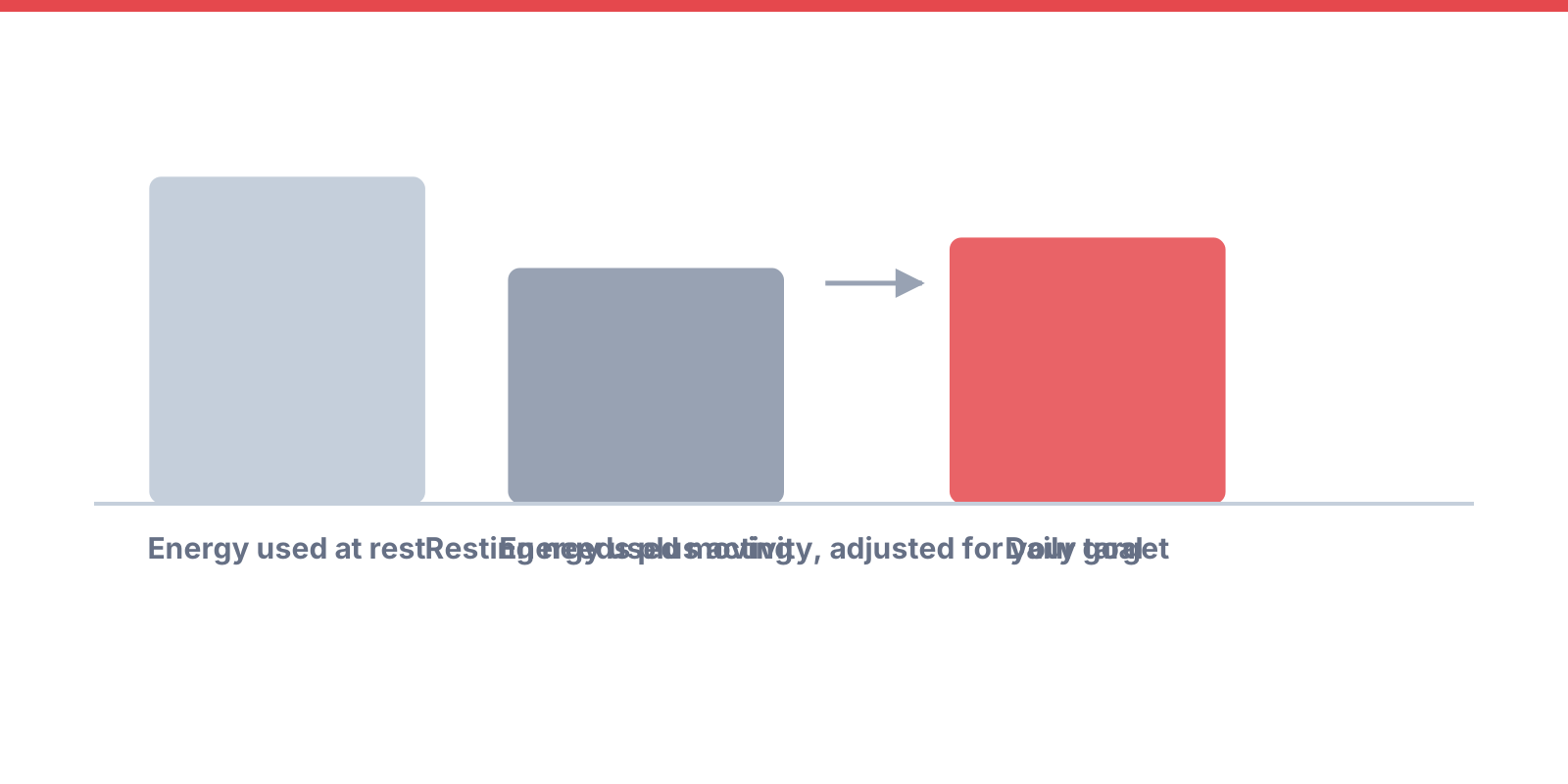
- BMR (at rest)
- 1,760 cal/day
- Maintenance (TDEE)
- 2,728 cal/day
Full Breakdown
- Basal Metabolic Rate (BMR)
- 1,760 cal/day
- Maintenance (TDEE)
- 2,728 cal/day
What this calculator assumes
- BMR uses the Mifflin-St Jeor equation, then is multiplied by an activity factor to give TDEE.
- Activity multiplier applied: 1.55× BMR.
- Weight change assumes roughly ±3,500 cal/week ≈ ±1 lb/week of body weight. Real rates vary.
Formulas, assumptions, and rounding are documented in our calculator methodology.
Built and maintained by Will Henschell, Data Scientist. Editorial policy.
Mifflin-St Jeor BMR Formula
Men: BMR = (10 × weight in kg) + (6.25 × height in cm) − (5 × age) + 5. Women: BMR = (10 × weight in kg) + (6.25 × height in cm) − (5 × age) − 161. Example (30-year-old woman, 165 cm, 65 kg): BMR = (10×65) + (6.25×165) − (5×30) − 161 = 650 + 1,031 − 150 − 161 = 1,370 calories/day at rest.
TDEE Activity Multipliers
Sedentary (little/no exercise): BMR × 1.2. Lightly active (1–3 days/week): BMR × 1.375. Moderately active (3–5 days/week): BMR × 1.55. Very active (6–7 days/week): BMR × 1.725. Extra active (physical job + hard daily training): BMR × 1.9.
Calorie Targets for Different Goals
Maintenance: eat at TDEE. Mild weight loss (0.5 lbs/week): TDEE − 250 calories. Moderate weight loss (1 lb/week): TDEE − 500 calories. Aggressive weight loss (2 lbs/week): TDEE − 1,000 calories (use only with medical guidance). Mild weight gain (0.5 lbs/week): TDEE + 250 calories. These are starting points — adjust based on your actual results over 2–4 week periods.
Next Step: Calculate Your Macros
Once you know your daily calorie target, the next step is deciding how to split those calories across protein, carbohydrates, and fat (macronutrients). Protein supports muscle maintenance and satiety; carbohydrates fuel exercise and brain function; fat supports hormones and fat-soluble vitamin absorption. Use the Macro Calculator with your calorie result to get personalized protein, carb, and fat targets in grams for your specific goal.
Frequently Asked Questions
- This calculator uses the Mifflin-St Jeor equation, which is widely regarded as the most accurate formula for estimating Basal Metabolic Rate (BMR) in non-clinical settings. BMR is then multiplied by an activity factor to calculate Total Daily Energy Expenditure (TDEE).
- BMR (Basal Metabolic Rate) is the calories your body burns at complete rest — just to keep you alive. TDEE (Total Daily Energy Expenditure) is BMR multiplied by an activity factor to account for exercise and daily movement. TDEE represents your true daily calorie burn and is the number you compare against your calorie intake.
- A daily deficit of 500 calories below your TDEE is associated with approximately 1 pound of weight loss per week, which is generally considered a safe and sustainable rate. Deficits below 1,200 calories/day for women or 1,500 calories/day for men can cause nutrient deficiencies and muscle loss, and are not recommended without medical supervision.
- Research shows the Mifflin-St Jeor equation predicts measured BMR within 10% for about 80% of people. Individual variation in metabolism, thyroid function, body composition, and genetics means your actual calorie needs could differ by ±15–20% from the calculated estimate. Track your actual weight changes over 2–4 weeks and adjust your target accordingly.
- Sedentary: desk job, minimal exercise. Lightly active: light exercise 1–3 days/week. Moderately active: moderate exercise 3–5 days/week. Very active: hard exercise 6–7 days/week. Extra active: physical labor job plus hard daily training. Most people overestimate their activity level — if unsure, choose one level lower than you think.
- A moderate calorie surplus of 250–500 calories above your TDEE, combined with consistent resistance training, supports muscle growth with minimal fat gain. Beginners may respond to smaller surpluses (150–250 cal/day); advanced lifters typically need 300–500+ cal/day above maintenance. Surpluses larger than 500 calories tend to add more fat than muscle. Track body weight and strength over 4-week blocks and adjust the surplus based on actual results.