
BMI Calculator for Adults
Calculate your Body Mass Index (BMI) from height and weight using US or metric units. See your BMI category, healthy weight range for your height, and what BMI can and cannot tell you about your health.
Your BMI
25.1Overweight
Healthy weight for this height: 129–174 lbs
- Category
- Overweight
- BMI range
- 25.0 – 29.9
BMI Scale
BMI Categories
- Underweight
- Below 18.5
- Healthy Weight
- 18.5 – 24.9
- Overweight
- 25.0 – 29.9
- Obese (Class I)
- 30.0 – 34.9
- Obese (Class II)
- 35.0 – 39.9
- Obese (Class III)
- 40.0 and above
What this calculator assumes
- BMI = weight (kg) ÷ height (m)². It is a screening measure, not a diagnosis.
- BMI does not distinguish muscle from fat, and does not account for body composition, frame size, age, sex or ethnicity. Athletes are routinely classified “overweight” by it.
- The adult categories used here are the WHO/NIH thresholds. They do not apply to children or to pregnancy.
Formulas, assumptions, and rounding are documented in our calculator methodology.
Built and maintained by Will Henschell, Data Scientist. Editorial policy.
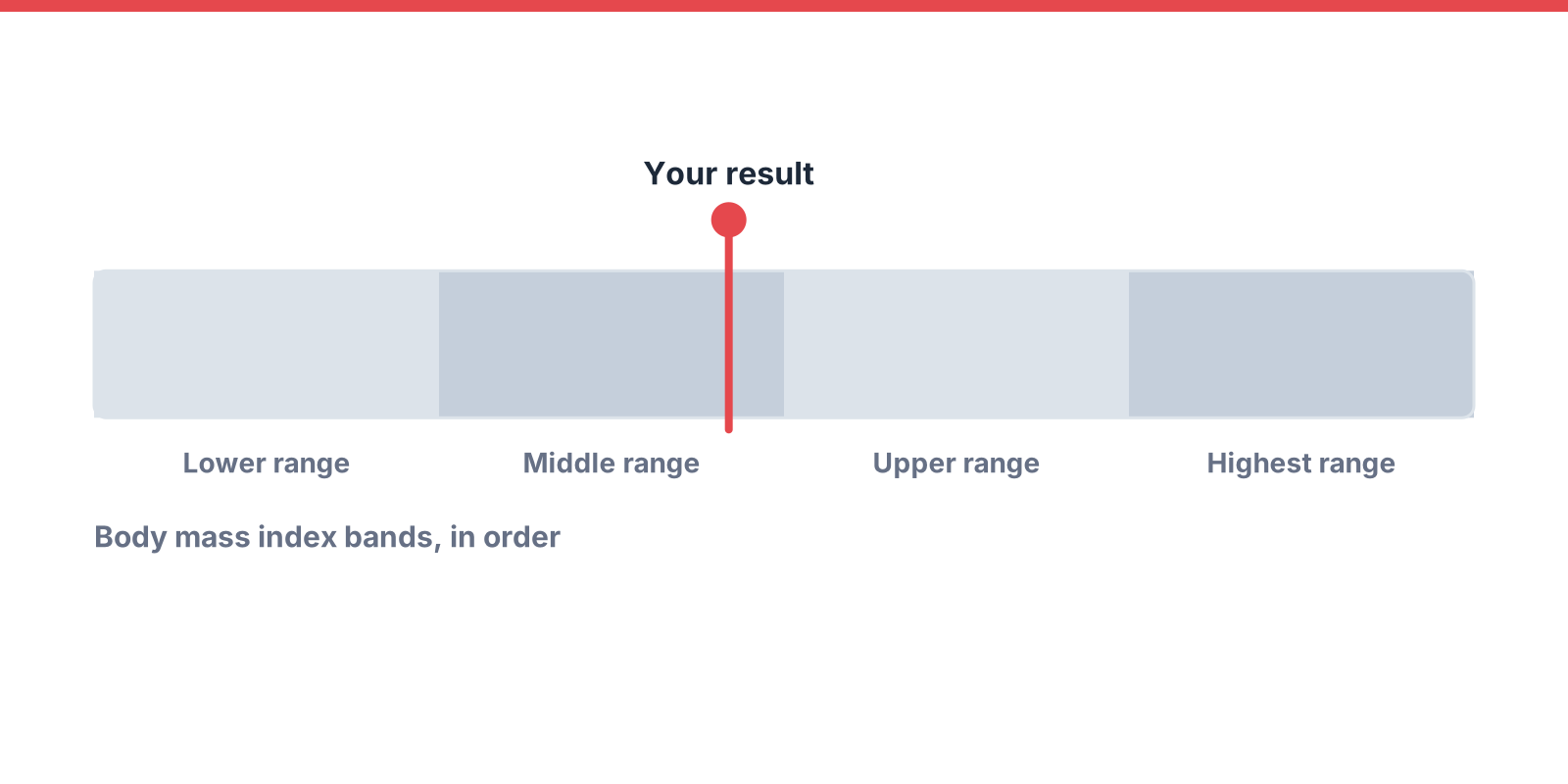
Adult BMI Categories (WHO/CDC Standard)
Underweight: BMI below 18.5. Healthy weight: 18.5 to 24.9. Overweight: 25.0 to 29.9. Obesity Class I: 30.0 to 34.9. Obesity Class II: 35.0 to 39.9. Obesity Class III (severe obesity): 40.0 and above. These categories are the same for adult men and women of all ages.
BMI Formula and Example Calculation
Metric: BMI = kg ÷ m². US: BMI = (lbs ÷ in²) × 703. Step-by-step US example: height 5'9" = 69 inches. Weight = 175 lbs. BMI = (175 ÷ 69²) × 703 = (175 ÷ 4,761) × 703 = 0.03677 × 703 = 25.8. Category: Overweight. Healthy weight range at 5'9": BMI 18.5–24.9 = approximately 125–168 lbs.
Known Limitations of BMI
BMI was developed in the 1830s as a population statistics tool, not as an individual health assessment. It measures only the ratio of weight to height squared and cannot determine where fat is stored (abdominal fat carries higher cardiovascular risk than fat elsewhere), how much of your weight is muscle vs. fat, or your metabolic health. Two people with identical BMIs can have radically different body compositions and health profiles. Use BMI as a conversation starter with your healthcare provider, not as a health verdict.
Alternative Body Composition Measures
Because BMI cannot distinguish muscle from fat or measure where fat is stored, other assessments provide additional context. Waist-to-height ratio (WHtR): a ratio above 0.5 is associated with increased cardiovascular and metabolic risk regardless of BMI. Waist circumference: above 40 inches (102 cm) for men or 35 inches (88 cm) for women indicates higher risk. Body fat percentage (measured by DEXA scan, underwater weighing, or air-displacement plethysmography) is the most direct fat measurement. Use these measures alongside BMI for a fuller picture.
Sources and Methodology
BMI categories used in this calculator follow the World Health Organization (WHO) and U.S. Centers for Disease Control and Prevention (CDC) adult classification system. The healthy weight range shown in results is derived by solving the BMI formula for weight at BMI 18.5 and 24.9 for the entered height. This calculator applies adult BMI categories only; children and teens require age- and sex-specific BMI percentile charts from the CDC.
Frequently Asked Questions
- For adults 18 and older, the standard WHO and CDC categories are: Underweight (BMI below 18.5), Healthy weight (18.5–24.9), Overweight (25.0–29.9), Obesity Class I (30.0–34.9), Obesity Class II (35.0–39.9), and Obesity Class III (40 and above). These categories are based on population-level health risk correlations — they are not individual diagnostic thresholds.
- Metric formula: BMI = weight (kg) ÷ height² (m²). US formula: BMI = [weight (lbs) ÷ height² (inches²)] × 703. Example: 160 lbs, 5'8" (68 inches). BMI = (160 ÷ 4,624) × 703 = 24.3, which is in the Healthy range.
- No — BMI is a known limitation for muscular individuals. A 200 lb person who is 5'10" has a BMI of 28.7 (Overweight), whether that person is a bodybuilder with 10% body fat or a sedentary person with 35% body fat. BMI cannot distinguish between muscle and fat. Body fat percentage measurement (DEXA scan, hydrostatic weighing) provides a more accurate body composition assessment.
- No. Children and teenagers (under 20) use age- and sex-specific BMI percentile charts, not fixed adult categories. A 12-year-old's BMI is compared against other children of the same age and sex to determine their percentile. This calculator uses adult BMI categories only.
- BMI does not measure body fat percentage, fat distribution, muscle mass, or bone density. It can misclassify muscular athletes as overweight and may underestimate health risks in people with normal BMI but high abdominal fat. Some research suggests the BMI risk thresholds may differ by ethnicity. Medical assessment of weight-related health typically considers BMI alongside waist circumference, blood pressure, cholesterol, and other clinical markers.
- A BMI outside the healthy range is a starting point for a conversation with your healthcare provider, not a diagnosis. Your provider may assess waist circumference, body composition, blood pressure, cholesterol, blood sugar, and family history alongside BMI. Modest weight changes — even 5–10% of body weight — are associated with meaningful health improvements. Only your healthcare provider can recommend appropriate next steps tailored to your complete health profile.