
Cooking Measurement Converter
Convert between teaspoons, tablespoons, cups, fluid ounces, pints, quarts, gallons, milliliters, and liters for any recipe. Includes ingredient-specific gram weights, US vs. metric cup explanation, quick charts, and a baking accuracy guide.
cup → ml
236.6ml
1 cup = 236.6 ml
Quick conversions
Accepts decimals, e.g. 0.5 for half.
What this calculator assumes
- These are liquid volume conversions. Dry ingredients vary a great deal by density — 1 cup of flour and 1 cup of sugar do not weigh the same.
- For baking, weight is more reliable than volume. Prefer grams where a recipe offers them.
- Cups, pints and quarts are US customary. A UK cup and a US cup differ.
Formulas, assumptions, and rounding are documented in our calculator methodology.
Built and maintained by Will Henschell, Data Scientist. Editorial policy.
US Cooking Measurement Quick Reference
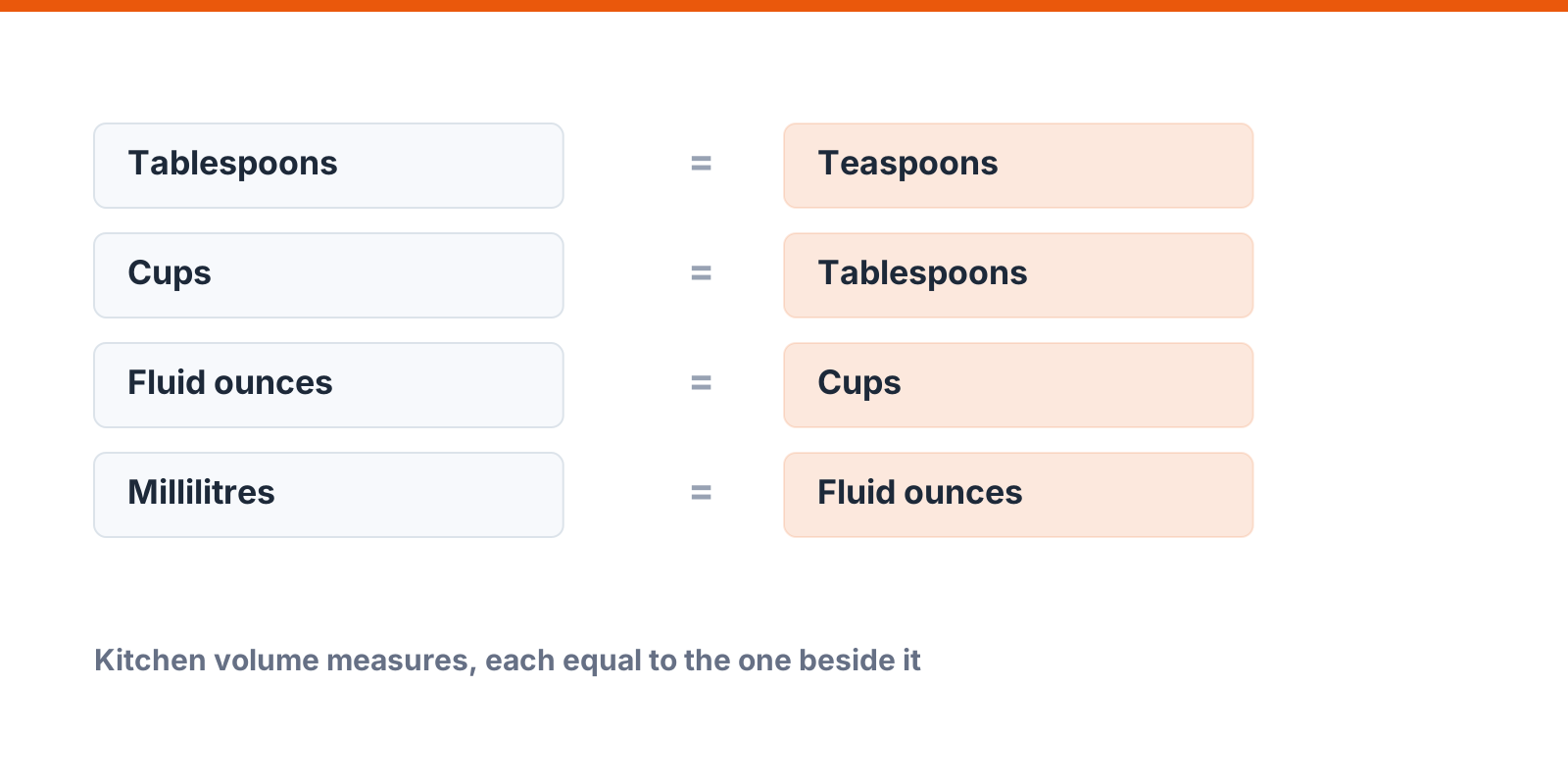
3 teaspoons = 1 tablespoon = 15 ml. 2 tablespoons = 1 fl oz = 30 ml. 4 tablespoons = ¼ cup = 60 ml. 8 tablespoons = ½ cup = 120 ml. 16 tablespoons = 1 cup = 237 ml. 8 fl oz = 1 cup. 2 cups = 1 pint = 473 ml. 2 pints = 1 quart = 946 ml. 4 quarts = 1 gallon = 3.785 L. 1 liter ≈ 4.23 cups ≈ 33.8 fl oz.
US Cup vs. Metric Cup vs. Imperial Cup
US cup: 236.6 ml — the standard for American recipes. Metric cup (Australia, Canada, South Africa): 250 ml — used in these countries' published recipes. Imperial cup (older UK recipes): 284 ml — now rarely used; modern UK recipes use grams and ml directly. If a recipe's origin is ambiguous, check other measurements: a recipe listing '200g flour' alongside cups suggests metric cup (250 ml). A recipe with only cup/tbsp/tsp measurements is almost certainly US-standard.
Ingredient-Specific Cup to Gram Conversions
These are approximate — actual weights vary by brand, grind, and measurement technique. All-purpose flour: 1 cup ≈ 125 g. Bread flour: 1 cup ≈ 130 g. Granulated sugar: 1 cup ≈ 200 g. Brown sugar (packed): 1 cup ≈ 213 g. Powdered sugar (sifted): 1 cup ≈ 120 g. Butter: 1 cup ≈ 227 g (2 sticks). Rolled oats: 1 cup ≈ 90 g. Cocoa powder: 1 cup ≈ 85 g. Rice (uncooked, long-grain): 1 cup ≈ 185 g. Honey or maple syrup: 1 cup ≈ 340 g. Olive oil: 1 cup ≈ 215 g. Whole milk: 1 cup ≈ 240 g.
Baking Accuracy Guide
For casual cooking, volume measurements with cups and spoons are perfectly adequate. For baking — especially cookies, cakes, and bread — small differences in flour or leavening can affect the result noticeably. To measure flour accurately by volume: spoon flour into the cup, then level with a straight edge. Never scoop directly (compacts flour by up to 20%). For consistent results across batches and across different cooks following the same recipe, use a kitchen scale and grams. A basic digital scale accurate to 1 gram costs under $15 and eliminates the main source of baking variability.
Frequently Asked Questions
- There are exactly 3 teaspoons in 1 tablespoon. 1 tablespoon = 3 teaspoons = 15 ml. ½ tablespoon = 1½ teaspoons = 7.5 ml. This is one of the most useful cooking conversions to memorize.
- There are 16 tablespoons in 1 US cup. ½ cup = 8 tablespoons. ¼ cup = 4 tablespoons. ⅓ cup = 5 tablespoons + 1 teaspoon. These fractions come up constantly in baking.
- 1 US cup = 236.588 milliliters (approximately 237 ml). 1 Australian/Canadian metric cup = 250 ml. 1 older UK imperial cup = 284 ml (rarely used today). If following an Australian recipe, use 250 ml per cup. For most international recipes, 240 ml is a commonly used working value.
- 1 cup of all-purpose flour = approximately 120–130 grams if spooned and leveled, or up to 150–160 grams if scooped directly. This wide range is why professional bakers weigh flour in grams. Use 125 g per cup as a standard working value unless the recipe specifies.
- Fluid ounces (fl oz) measure volume: 1 US fl oz = 29.57 ml. Weight ounces measure mass: 1 oz = 28.35 grams. For water, 1 fl oz ≈ 1 oz by weight. For other ingredients, they differ — 1 fl oz of honey weighs about 1.5 oz because honey is denser than water. Use fl oz for liquids measured by volume and weight oz for ingredients measured on a scale.
- Liquid measuring cups are clear with a pour spout and handle, designed to be filled to a marked line while resting flat. Dry measuring cups are solid and meant to be overfilled then leveled off with a straight edge. The volume is the same (1 cup = 237 ml), but using liquid cups for dry ingredients or vice versa introduces inconsistency. For baking precision, weight in grams is more reliable than either.
- Weight is more precise than volume for dry ingredients. A cup of flour can weigh anywhere from 120 to 160 grams depending on measurement technique (scooped vs. spooned and leveled vs. packed). For everyday cooking, volume is fine. For baking — especially bread and pastry — gram weights produce more consistent results and are the professional standard.