
401(k) Calculator
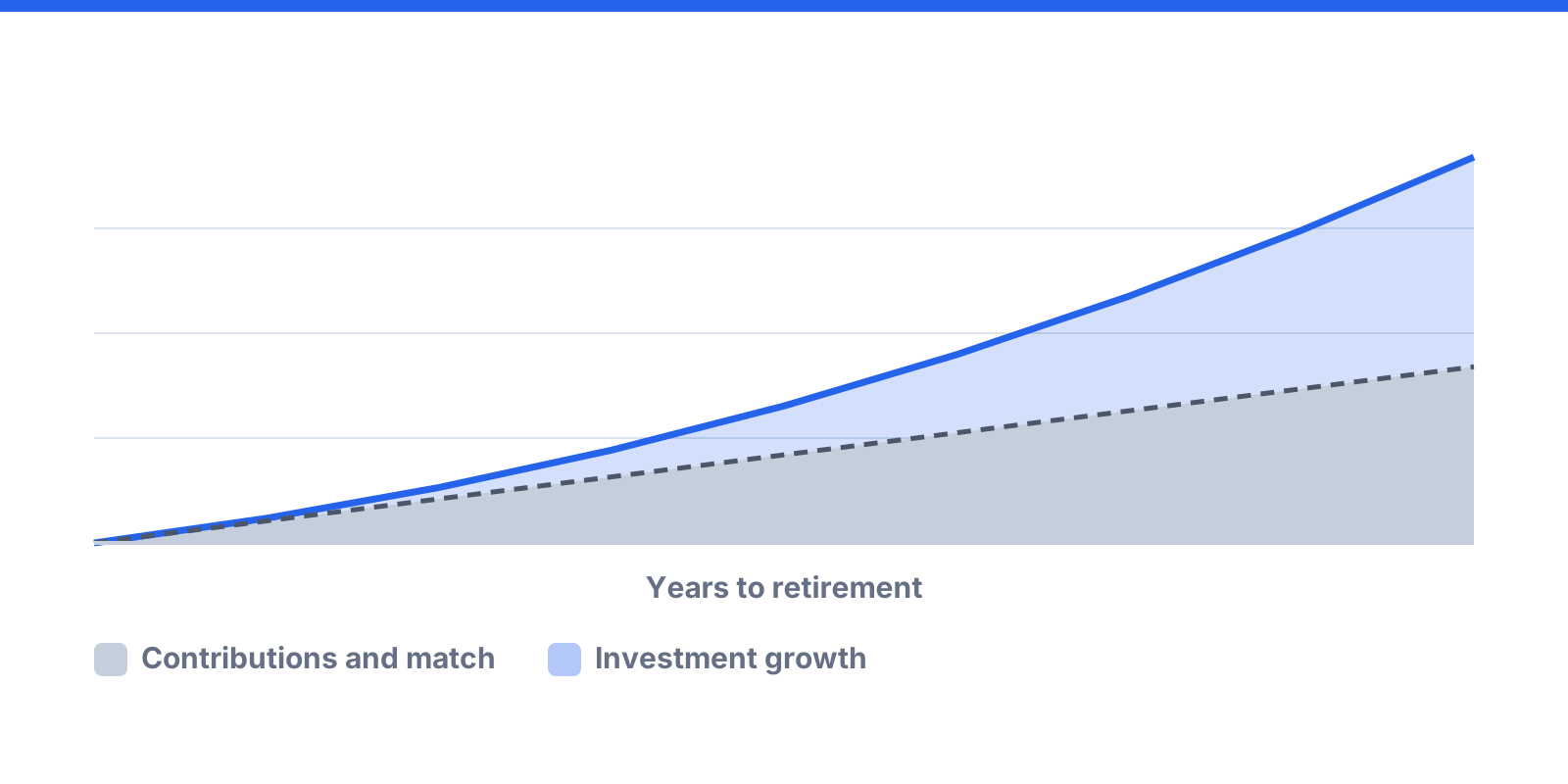
Project your 401(k) balance at retirement based on salary, your contribution percentage, employer match, current balance, and expected return. See the full breakdown of your contributions, employer match, and growth.
Projected 401(k) Balance
$973,427
After 30 years at 7% annual return
Projection Breakdown
- Projected Balance
- $973,427
- Your Contributions
- $182,556
- Employer Contributions
- $91,278
- Starting Balance
- $25,000
- Investment Growth
- $674,592
Where the Money Comes From
Financial Disclaimer: Projections assume constant salary growth, a constant annual return, and contributions made at the end of each year. Actual results depend on market performance, contribution limits (IRS 401(k) limits change annually), tax treatment (traditional pre-tax vs. Roth), vesting schedules, plan fees, and other factors. This is for educational estimation only and is not financial advice. Consult a licensed financial advisor for personalized retirement planning.
Formulas, assumptions, and rounding are documented in our calculator methodology.
Built and maintained by Will Henschell, Data Scientist. Editorial policy.
How This Calculator Projects Your 401(k)
Each year, the calculator adds your contributions (salary × employee %) and employer match contributions, then applies the expected return to the cumulative balance. Salary grows by your specified annual raise each year. The employer match calculation: employer contributes (employer match %) × min(employee contribution %, match up to %) × salary. Example: 50% match up to 6% means if you contribute 6%+, you receive 3% of salary (50% × 6%).
Maximizing Employer Match — Free Money
The employer match is the highest guaranteed 'return' available in personal finance. A 50% match on contributions up to 6% is equivalent to an immediate 50% return on those dollars before any investment growth. Always contribute at least enough to capture the full employer match before directing money elsewhere. Not doing so is leaving part of your compensation on the table.
IRS Contribution Limits and Important Caveats
The IRS sets annual limits on 401(k) contributions (employee contributions and total contributions including employer match). Check IRS.gov for current year limits — they adjust for inflation annually. This calculator does not enforce IRS limits. Actual account performance depends on your plan's investment options, fees, market conditions, and whether you use traditional or Roth treatment. Consult a financial advisor or HR department for personalized guidance.
Frequently Asked Questions
- Employer matching means your employer contributes additional money to your 401(k) based on your contribution. A common match is '50% up to 6% of salary,' meaning if you earn $70,000 and contribute 6% ($4,200), your employer adds 50% of that ($2,100) — but only up to the 6% cap. If you contribute less than 6%, you receive less match. Contributing at least up to the full match is generally considered a minimum priority since it is effectively free compensation.
- A common rule of thumb is to contribute at least enough to get your full employer match (e.g., 6% if your employer matches up to 6%), then increase contributions over time toward the IRS annual maximum (check IRS.gov for current limits, which change annually). If you cannot afford the full match, contribute as much as you can and increase by 1% per year as salary increases. Prioritize high-interest debt (credit cards) before maximizing retirement contributions.
- Traditional 401(k): contributions are pre-tax (reduce your taxable income now), but withdrawals in retirement are taxed as ordinary income. Roth 401(k): contributions are after-tax (no immediate tax benefit), but qualified withdrawals in retirement are tax-free including all growth. Roth generally benefits younger workers in lower tax brackets today who expect higher taxes in retirement. Traditional generally benefits high earners who expect lower taxes in retirement. Many plans allow both.
- When you leave a job you generally have four options: leave the money in your former employer's plan (if allowed); roll it over to your new employer's 401(k) plan; roll it over to an individual IRA; or cash it out (not recommended — you'll owe income taxes plus a 10% early withdrawal penalty if you're under 59½). Rolling over preserves tax-deferred growth and avoids penalties.
- Vesting is the schedule by which you legally own employer contributions. Some employers vest immediately (cliff vesting on day 1). Others use graded vesting (e.g., 20% per year over 5 years) or cliff vesting (100% ownership after 3 years). Your own contributions are always 100% vested immediately. This calculator does not account for vesting schedules — confirm your plan's vesting policy before making job change decisions.