
Paycheck Calculator
Estimate take-home pay from gross pay, pay frequency, federal filing status, pre-tax deductions, optional state or local tax rate, and extra withholding. Uses simplified 2026 federal tax and FICA assumptions.
Estimated take-home pay
$2,294.12per paycheck
About $59,647 per year
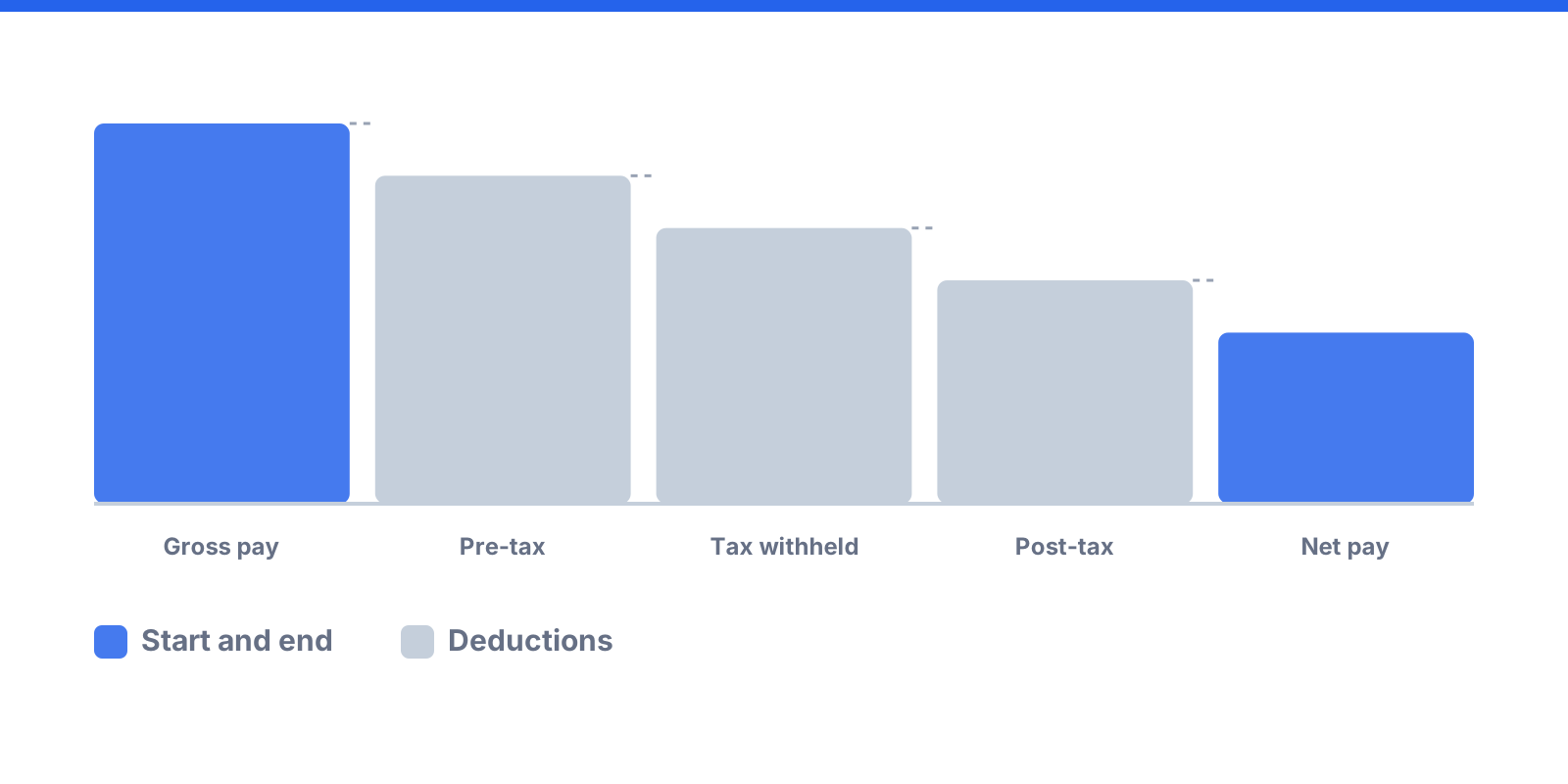
Per-Paycheck Breakdown
- Gross pay
- $3,000.00
- Pre-tax deductions
- -$200.00
- Federal income tax
- -$276.38
- Social Security
- -$186.00
- Medicare
- -$43.50
- State/local estimate
- -$0.00
- Additional federal withholding
- -$0.00
- Post-tax deductions
- -$0.00
- Estimated net pay
- $2,294.12
Annualized Estimate
- Annual gross pay
- $78,000
- Federal income tax
- $7,186
- Social Security tax
- $4,836
- Medicare tax
- $1,131
- State/local estimate
- $0
- Estimated annual take-home
- $59,647
Where gross pay goes
Estimate limits
This is a simplified paycheck estimate using 2026 federal income tax brackets, the standard deduction, Social Security, and Medicare. It is not a full payroll system or tax filing tool. It does not model Form W-4 dependents, multiple jobs, state-specific rules, local payroll taxes, benefit-specific tax treatment, or employer policies.
Social Security is capped at annual wages up to $184,500. Medicare has no wage cap and may include Additional Medicare Tax at higher incomes.
Formulas, assumptions, and rounding are documented in our calculator methodology.
Built by Will Henschell, data scientist. Editorial policy.
Paycheck Estimate Formula
Annual gross pay = gross pay per paycheck x paychecks per year. Estimated federal taxable income = annual gross pay minus pre-tax deductions and the standard deduction. Estimated net paycheck = gross pay minus pre-tax deductions, federal income tax per check, Social Security, Medicare, optional state/local tax, extra federal withholding, and post-tax deductions.
Example Paycheck Calculation
Example: $3,000 bi-weekly gross pay equals $78,000 per year. If you enter $200 pre-tax deductions per paycheck, annual pre-tax deductions are $5,200. The calculator estimates federal income tax using 2026 brackets, adds Social Security and Medicare, then divides annual taxes back across 26 paychecks to estimate take-home pay.
Important Payroll Assumptions
This tool is built for planning and comparison, not official withholding. It uses the standard deduction, does not model dependents or W-4 Step 3 credits unless you manually adjust extra withholding elsewhere, and does not handle multiple jobs or year-to-date Social Security cap timing. For a precise paycheck, compare against your pay stub or payroll portal.
Frequently Asked Questions
- It annualizes your gross pay based on pay frequency, subtracts entered pre-tax deductions for the federal income tax estimate, applies 2026 federal brackets and the standard deduction for your filing status, then adds Social Security and Medicare payroll taxes. Optional state/local tax and extra federal withholding are treated as simple per-paycheck estimates.
- No. This is a simplified estimate. Payroll systems use your exact Form W-4, pay period details, benefit elections, state and local rules, employer policies, and year-to-date wages. Use your employer's payroll system or the IRS withholding estimator for official withholding decisions.
- This calculator subtracts pre-tax deductions for the federal income tax estimate, but it keeps Social Security and Medicare based on gross wages. That is conservative for common retirement deductions such as traditional 401(k) contributions, which generally reduce income tax but not FICA. Some benefits may be treated differently by payroll.
- State and local withholding rules vary widely and can depend on credits, exemptions, local taxes, and special payroll formulas. This calculator uses a simple flat optional state/local percentage so you can approximate that line without pretending to model every state payroll system.
- The estimate includes federal income tax, Social Security tax, Medicare tax, and Additional Medicare Tax when annualized wages exceed the relevant threshold. It does not include unemployment insurance, disability insurance, city taxes, paid family leave taxes, garnishments, or employer-specific deductions unless you enter them manually.