
Refinance Calculator
Compare your current mortgage to a refinanced loan. Calculate new payment, monthly savings, break-even time, total interest difference, and net savings after closing costs.
New Monthly Payment
$1,419.47per month
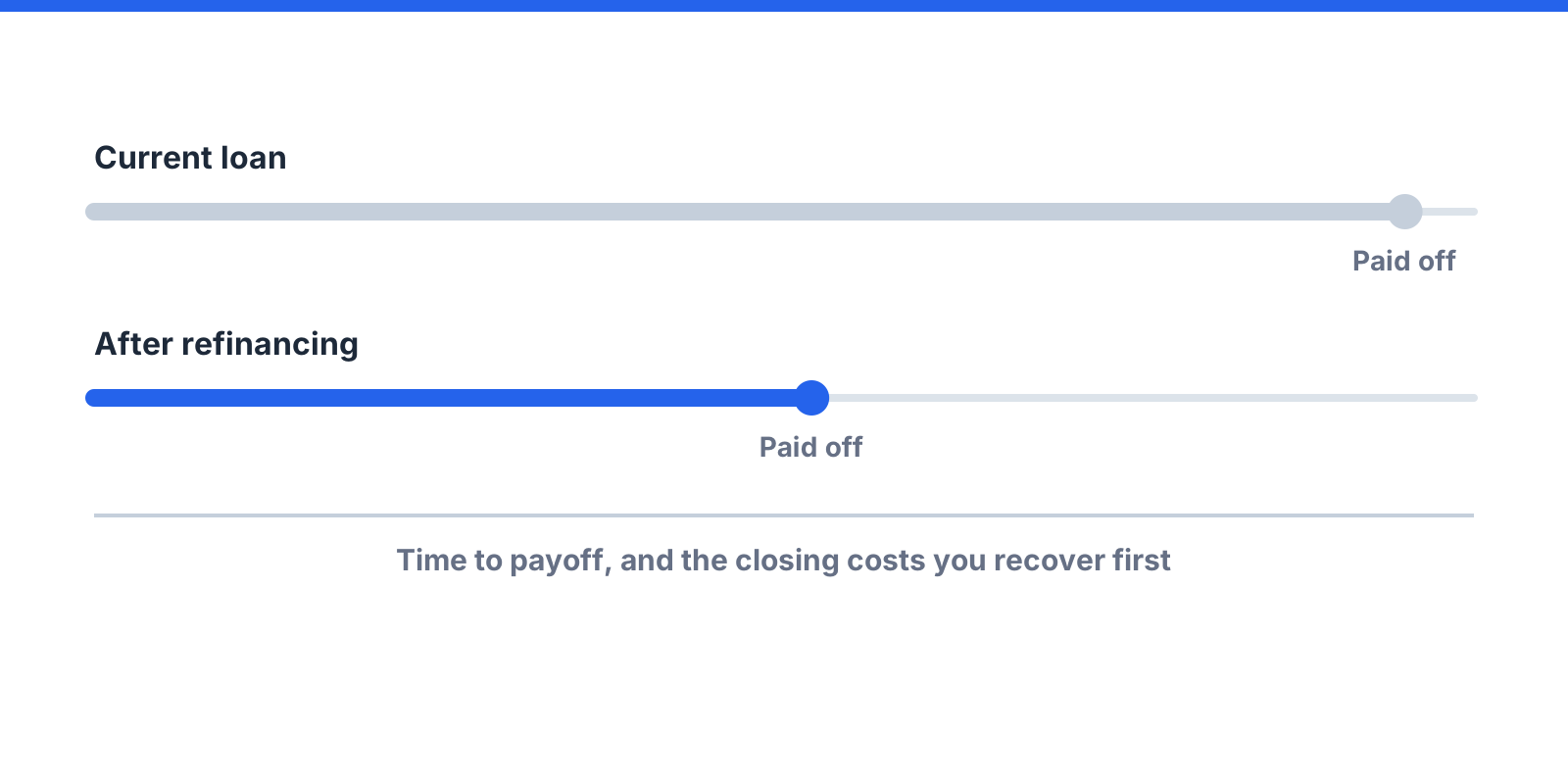
Break-even in 19 months
- Monthly change
- +$268.55
Payment Comparison
- Current monthly payment
- $1,688.02
- New monthly payment
- $1,419.47
- Monthly savings
- $268.55
Total Cost Comparison
- Current remaining interest
- $256,405
- New total interest
- $261,010
- Interest difference
- $4,605
- Closing costs
- $5,000
- Net savings (interest − closing costs)
- -$9,605
Formulas, assumptions, and rounding are documented in our calculator methodology.
Built and maintained by Will Henschell, Data Scientist. Editorial policy.
When Does Refinancing Make Sense?
Refinancing generally makes sense when you can reduce your interest rate by at least 0.5–1%, you plan to stay in the home past the break-even point, and closing costs are reasonable relative to your savings. Common motivations include lowering monthly payments, shortening the loan term, switching from an adjustable to a fixed rate, or accessing home equity (cash-out refinance).
Total Cost vs. Monthly Payment
Monthly savings and total cost savings often point in different directions. Refinancing from a 20-year remaining mortgage into a new 30-year loan at a lower rate may reduce monthly payments by $300 but increase total interest paid by $40,000. This calculator shows both so you can make an informed trade-off based on your financial priorities.
Rate-and-Term vs. Cash-Out Refinance
A rate-and-term refinance replaces your current loan with a new one at better terms, keeping the balance the same. A cash-out refinance lets you borrow more than you owe and take the difference as cash — useful for home improvements or debt consolidation, but it increases your loan balance and interest cost. This calculator models rate-and-term refinancing; for cash-out scenarios, use your new higher balance as the input.
Frequently Asked Questions
- Break-even months = closing costs ÷ monthly savings. If you pay $5,000 in closing costs and save $150/month, your break-even is 34 months (about 2.8 years). If you plan to stay in the home longer than the break-even point, refinancing typically makes financial sense.
- Not always. If your new loan has a longer term, you may save on monthly payments but pay more in total interest over the life of the loan. The calculator shows both monthly savings and net total cost comparison so you can evaluate both dimensions.
- Refinance closing costs typically range from 2–5% of the loan balance, covering origination fees, appraisal, title insurance, and prepaid interest. Some lenders offer no-closing-cost refinances by rolling fees into the rate or loan balance.
- Savings depend on the rate reduction, remaining loan term, and loan balance. A 1% rate reduction on a $300,000 loan with 25 years remaining can save $150–200/month and over $50,000 in total interest. Use this calculator to model your specific situation.
- Extending the term (e.g., refinancing a 20-year remaining mortgage into a new 30-year) lowers monthly payments but usually increases total interest paid. Refinancing into a shorter term increases monthly payments but saves significantly on interest. The right choice depends on your cash flow needs and long-term goals.