
EV Charging Cost Calculator
Estimate home or public EV charging cost from usable battery capacity, state-of-charge change, wall-to-battery efficiency, electricity price, and session fees.
Estimated charging cost
$8.50per session
20% to 80% · 50 kWh from the charger
- Battery energy added
- 45 kWh
- Charging loss
- 5 kWh
- Monthly cost
- $102.00
Energy per charging session
- State-of-charge increase
- 60.0%
- Energy stored in battery
- 45 kWh
- Energy drawn from charger
- 50 kWh
- Charging loss (10.0% of wall energy)
- 5 kWh
- Energy charge
- $8.50
- Session fee
- $0.00
- Total cost per session
- $8.50
- Cost per battery kWh stored
- $0.19/kWh
Monthly estimate (12 sessions)
- Battery energy added
- 540 kWh
- Wall/charger energy
- 600 kWh
- Charging loss
- 60 kWh
- Estimated monthly cost
- $102.00
U.S. Department of Energy sources
Formula and loss assumptions reviewed 2026-08-13. Enter your vehicle's usable capacity and the all-in rate for the actual charging session.
What this calculator assumes
- Battery capacity means usable capacity across the displayed 0%-100% range.
- The 90% efficiency and $0.17/kWh defaults are editable examples, not national averages.
- Wall energy equals battery energy divided by wall-to-battery efficiency, so billed energy includes charging losses.
- Time-, idle-, parking-, subscription-, and tiered-demand charges are excluded unless folded into the all-in rate or session fee.
- Charging time and range added are excluded because charge curves, vehicle efficiency, speed, weather, and temperature require separate inputs.
Formulas, assumptions, and rounding are documented in our calculator methodology.
Built by Will Henschell, data scientist. Formula checked against U.S. Department of Energy Alternative Fuels Data Center, verified . Editorial policy.
The EV Charging Cost Formula
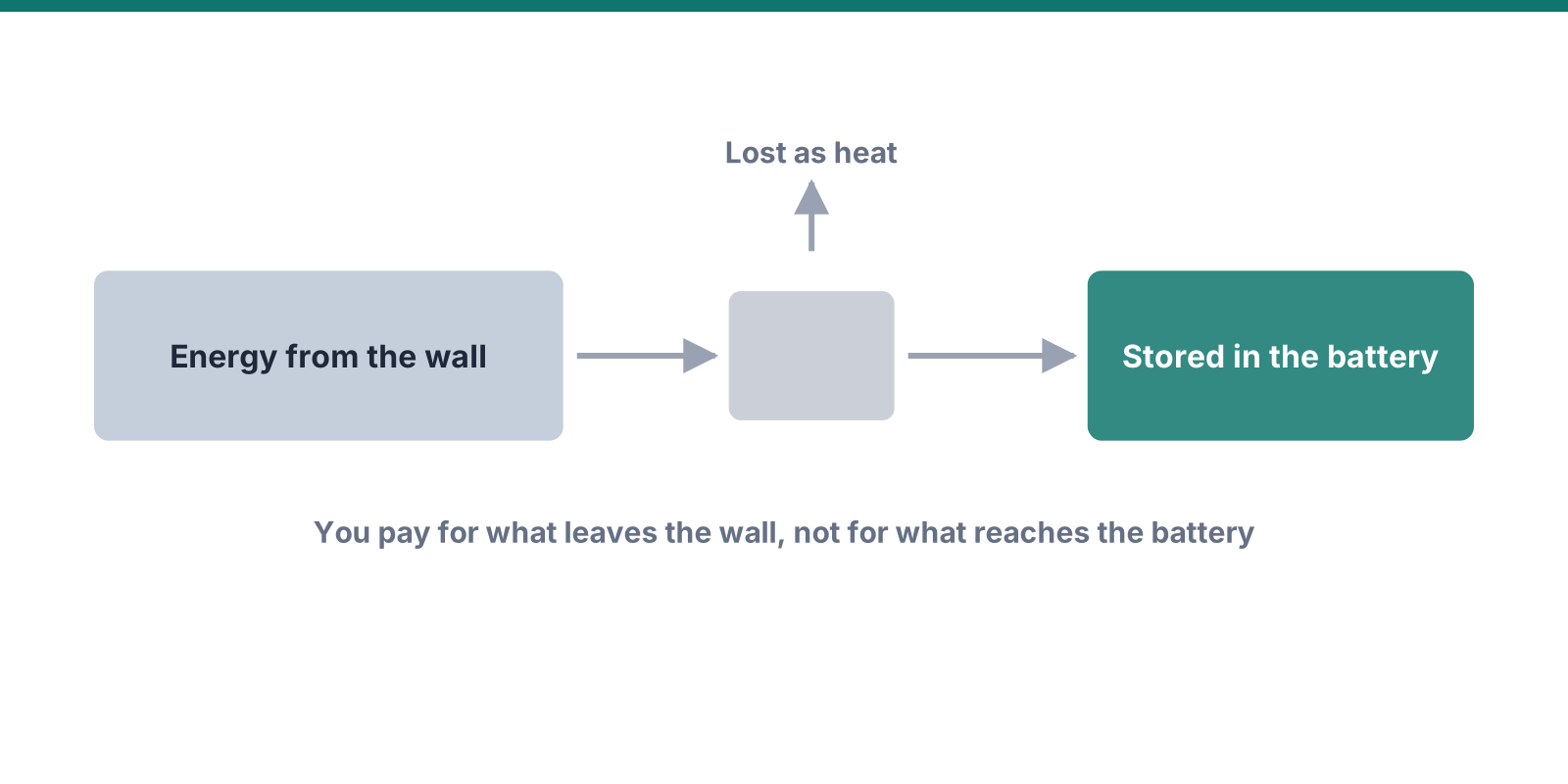
Battery energy added equals usable capacity multiplied by the percentage-point state-of-charge increase. Wall energy equals battery energy divided by wall-to-battery efficiency. Charging cost equals wall energy multiplied by the all-in price per kilowatt-hour, plus any fixed session fee. Monthly cost multiplies the same session by the number of sessions entered.
Battery Energy, Wall Energy, and Loss
A 75 kWh usable battery charged from 20% to 80% stores 45 kWh. At 90% efficiency, the charger must supply 50 kWh, so 5 kWh is lost before storage. At $0.17/kWh, that session costs $8.50. Pricing the 45 kWh stored instead would understate the utility or public-charger bill by 10% in this example.
Home and Public Prices Need Different Inputs
Home rates can change by utility, season, and time of use. Public networks may combine an energy price with a connection, time, parking, idle, or membership charge. Enter the price and fixed fee that apply to the specific session. The calculator deliberately does not embed a changing national electricity average or pretend one network's price applies everywhere.
What the Estimate Does Not Predict
Charging time needs charger power, vehicle acceptance rate, and the battery's taper curve. Range added needs vehicle consumption in kWh per 100 miles and varies with speed, weather, terrain, cabin climate, tires, and payload. This page stays focused on energy and cost so it does not imply precision from inputs it never collected.
Source and Assumption Review — August 13, 2026
The energy and cost model was reviewed against U.S. Department of Energy Alternative Fuels Data Center and Federal Energy Management Program guidance. The user supplies current price and equipment efficiency. The editable 90% efficiency is a planning example within DOE's published EVSE comparison, not a universal charger specification.
Frequently Asked Questions
- Multiply usable battery capacity by the state-of-charge increase to find energy stored. Divide that by wall-to-battery charging efficiency to estimate energy drawn from the charger. Multiply wall energy by the all-in electricity price and add any session fee. The calculator performs those steps without rounding intermediate energy values.
- Charging loses energy in the EVSE, onboard electronics, cables, battery conversion, and thermal conditioning. The U.S. Department of Energy has published examples ranging from 90% baseline EVSE efficiency to an illustration with about 16% wall-to-battery loss. Actual loss varies by vehicle, charger, temperature, and state of charge, so efficiency is editable.
- Use usable battery capacity when the manufacturer publishes it. Gross capacity can include buffers that the driver cannot access, so multiplying gross capacity by the displayed state-of-charge change may overstate energy added. If only gross capacity is available, treat the result as a rough upper estimate.
- Use the per-kWh price for the hours when the vehicle charges, including applicable energy taxes or adjustments if they are not shown separately. Time-of-use tariffs can differ sharply between off-peak and peak periods. The default $0.17/kWh is an editable example, not a national or local current-rate claim.
- Yes when the station bills by kWh: enter its all-in energy price and any connection fee. If it bills by minute, adds idle or parking charges, uses membership tiers, or changes power and price during the session, first convert those charges to an expected session amount or compare the result with the network's checkout estimate.