
Debt Payoff Calculator
Calculate how long it takes to pay off a debt at your current monthly payment. See the impact of extra payments on payoff time and total interest saved.
Debt-Free Date
December 2030
4 yr 2 mo
Payoff Summary
- Time to pay off
- 4 yr 2 mo
- Total interest paid
- $2,359
- Total amount paid
- $7,359
Formulas, assumptions, and rounding are documented in our calculator methodology.
Built by Will Henschell, data scientist. Editorial policy.
The True Cost of Minimum Payments
Credit card minimum payments are typically 1–2% of the balance or a flat $25 — whichever is greater. At 20% APR, a $5,000 balance paid with only minimum payments can take over 15 years to pay off and cost more than $5,000 in interest alone. Increasing your payment even modestly can dramatically change this outcome.
Extra Payments vs. Saving First
If your debt APR exceeds what you can earn in savings or investments (risk-adjusted), paying down debt first is the better financial move. At 20% APR, no savings account or investment reliably beats that return. But if you have an emergency fund, consider splitting extra cash between debt payoff and saving to avoid future high-interest borrowing.
Debt Avalanche vs. Debt Snowball
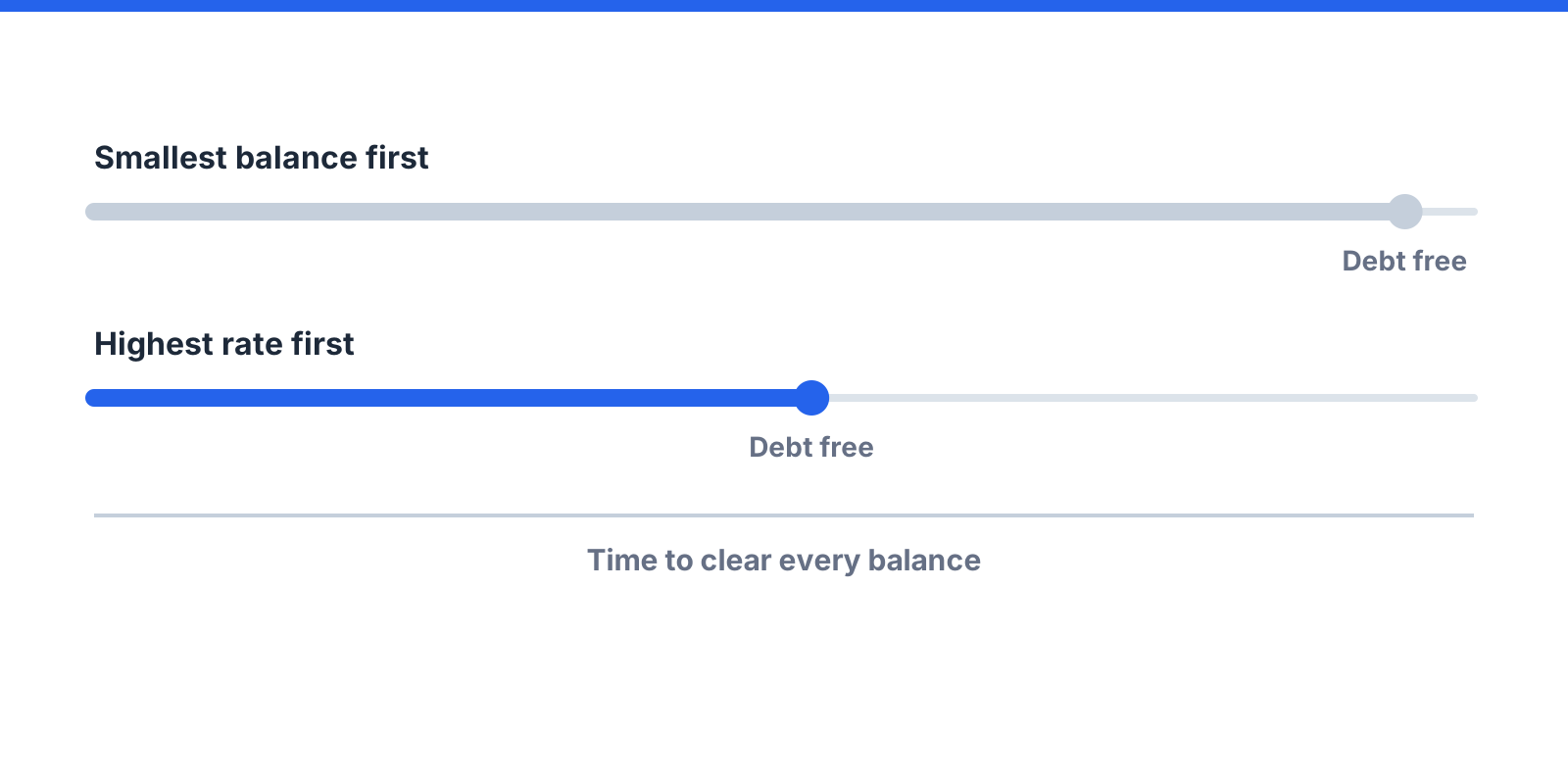
Avalanche: pay off highest-APR debt first — minimizes total interest paid. Snowball: pay off smallest balance first — provides psychological momentum from quick wins. Both work; the best method is the one you stick with. Use this calculator to model each approach and see the actual dollar difference.
Frequently Asked Questions
- Payoff months are calculated by simulating each month's interest charge and principal payment. Each month, interest = balance × (APR ÷ 12). The payment minus that interest reduces the principal. This continues until the balance reaches zero.
- Use the annual percentage rate (APR) shown on your statement or loan agreement. Credit cards typically show APR; some loans show annual interest rate (AIR). For most personal loans, credit cards, and consumer debts, APR is the correct rate to use.
- If your payment doesn't exceed the monthly interest charge, your balance grows each month (negative amortization). The calculator will warn you if this happens — you need to increase your payment to make progress.
- The debt avalanche method means paying minimum payments on all debts and directing any extra money to the highest-APR debt first. This minimizes total interest paid and is mathematically optimal. Use this calculator on each debt individually to model your avalanche sequence.
- On a $5,000 credit card balance at 20% APR with $150/month payments, adding $50/month (total $200/month) reduces payoff from about 42 months to 30 months and saves over $500 in interest.