
Waist-to-Height Ratio Calculator
Calculate your Waist-to-Height Ratio (WHtR) — an evidence-based screening tool for abdominal obesity and metabolic risk. Supports imperial and metric units.
Waist-to-Height Ratio
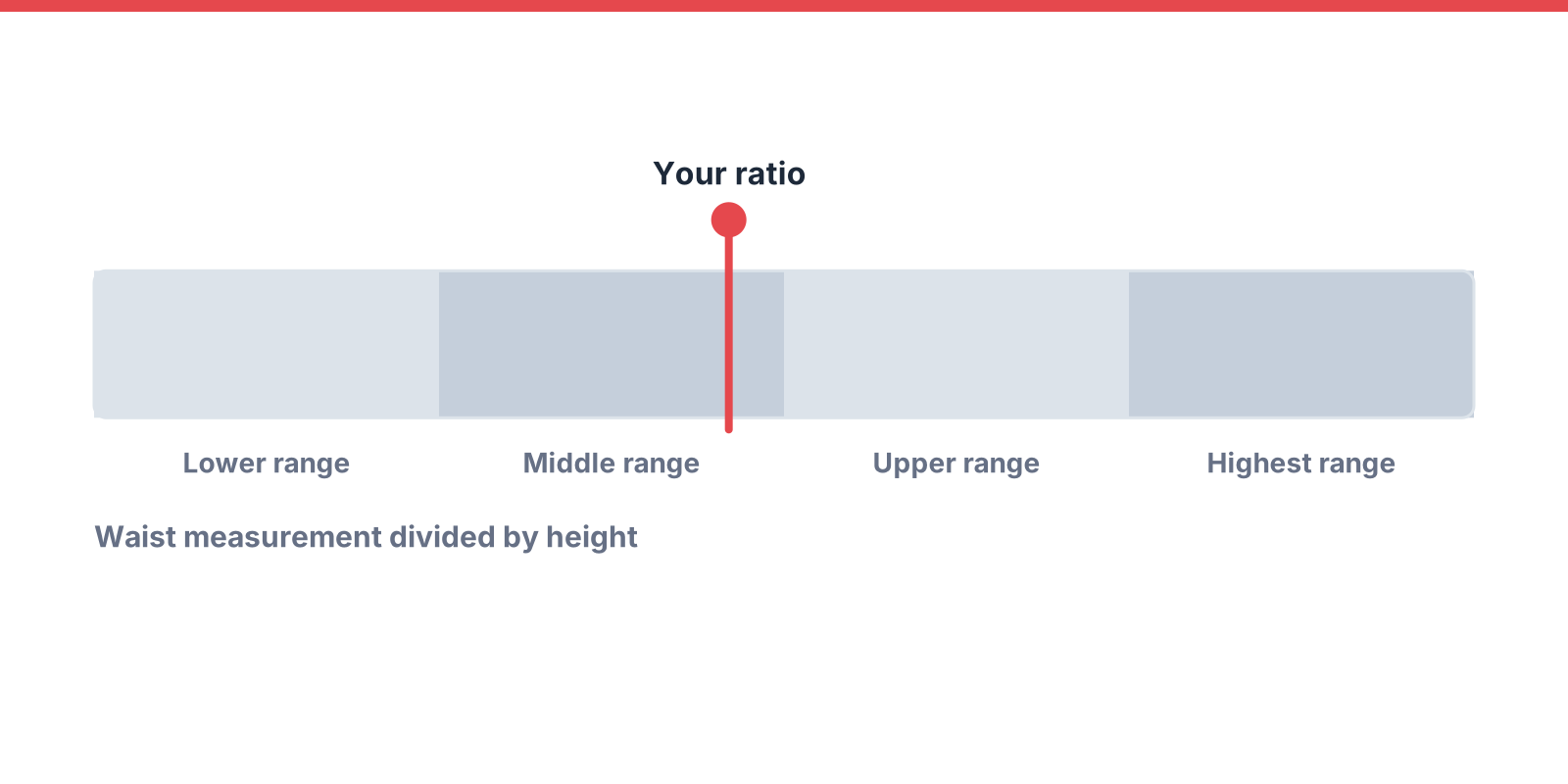
0.486Healthy
Your waist circumference is within a healthy range relative to your height.
| WHtR Range | Category |
|---|---|
| < 0.40 | Extremely Slim |
| 0.40 – 0.499 | Healthy |
| 0.50 – 0.599 | Overweight — Increased Risk |
| ≥ 0.60 | Obese — High Risk |
What this calculator assumes
- WHtR = waist circumference ÷ height, both in the same unit.
- The widely used rule of thumb is to keep your waist under half your height — a ratio below 0.5.
- Thresholds are for adults. They differ for children and are not adjusted here for pregnancy.
Formulas, assumptions, and rounding are documented in our calculator methodology.
Built and maintained by Will Henschell, Data Scientist. Editorial policy.
Why WHtR Predicts Health Risk
Abdominal (visceral) fat is metabolically active and is strongly associated with insulin resistance, elevated triglycerides, low HDL cholesterol, high blood pressure, and type 2 diabetes — collectively known as metabolic syndrome. The waist-to-height ratio captures central fat distribution better than BMI (which cannot distinguish fat from muscle) or waist circumference alone (which doesn't account for a person's height). A 2012 meta-analysis of 78 studies found WHtR was a stronger predictor of cardiometabolic risk than BMI or waist circumference alone.
WHtR vs. BMI vs. Waist Circumference
BMI (Body Mass Index) measures weight relative to height squared and is widely used but cannot distinguish fat from muscle; a muscular athlete may have a high BMI with low fat. Waist circumference alone is a useful proxy for visceral fat but does not scale with height — a 34-inch waist is proportionally different on a 5'2" person vs. a 6'4" person. WHtR normalizes waist size by height, making comparisons more meaningful across different body sizes. All three measures are screening tools, not diagnostic tests.
Reducing Abdominal Fat
Visceral fat is preferentially lost with a caloric deficit, aerobic exercise (150+ minutes/week of moderate activity), and resistance training. Sleep quality and stress management also affect cortisol levels, which influence visceral fat accumulation. No evidence supports 'spot reduction' — you cannot preferentially burn abdominal fat with ab exercises alone. Overall fat loss through diet and exercise reduces waist circumference and improves WHtR.
Frequently Asked Questions
- A WHtR below 0.5 is generally considered healthy — your waist should be less than half your height. A WHtR of 0.5–0.6 indicates overweight/increased risk. Above 0.6 indicates obese/high risk. Below 0.4 is classified as extremely slim.
- Divide your waist circumference by your height. Both measurements must be in the same unit (either both inches or both centimeters). Example: 34-inch waist ÷ 70-inch height = 0.486 WHtR.
- Research suggests WHtR may be a better predictor of cardiovascular and metabolic risk than BMI because it specifically measures central (abdominal) fat, which is more strongly associated with heart disease, type 2 diabetes, and hypertension than overall body fat. WHtR is also simple and does not vary by sex or ethnicity in the same way BMI risk thresholds do.
- Measure your waist at the level of your navel (belly button), or midway between the bottom of your lowest rib and the top of your hip bone — whichever is more prominent. Measure at the end of a normal exhalation, without sucking in. Do not measure over clothing.